
About
The Bethnal Green Nature Reserve is a cultural institute focused on ecological research and community learning in the heart of East London.
We host an annual residency for researchers working across the humanities, architecture and science. Our public programme actively engages with the environmental and social complexities of the surrounding urban landscape. The projects page on this website highlights some of our past and current work.
This space is a WW2 bomb-site that has been cared for since 1977 by local residents, volunteers, staff, trustees and its non-human inhabitants. The Nature Reserve has a delicate and complex ecosystem of plants, bats, birds, trees, soil, fungi, amphibians, insects, invertebrates and mammals (including people). We collectively want this space to exist and nurture a diverse urban ecosystem for many years to come.
How to get involved: We invite anyone to become a site caretaker. Site care can take many forms, including:
- Treading softly and keeping to the paths
- Sitting quietly by the pond observing bird, insect and amphibian life
- Litter picking
- Watering the medicine garden
- Composting your household food scraps
- Sharing your knowledge and experiences
- Wetlands and bat habitat management
- Woodland management
- Showing up for volunteer sessions and community gatherings
We ask everyone accessing the site to help care and conserve the site. Care takes many forms, adjusted for your interests, skills and abilities. We can arrange an introduction on how to support the Reserve tailored to you. Taking care of the Reserve is a great opportunity to connect with the natural world on your doorstep.
Please contact info@bethnalgreennaturereserve.org if you would like to join our team or hear more about the history of this unusual and remarkable place. We are a small organisation so thanks for your patience while waiting for a reply.
2026 Opening Hours
Weekly Volunteer Sessions, 11am – 1pm Saturdays (2nd May - 28th November)
A weekly activity where people can learn how to help care for the Nature Reserve. We have x10 places each week so please use this link to register your availability to join.
Weekly Public Opening Hours:
2pm – 5pm Saturdays (2nd May - 28th November)
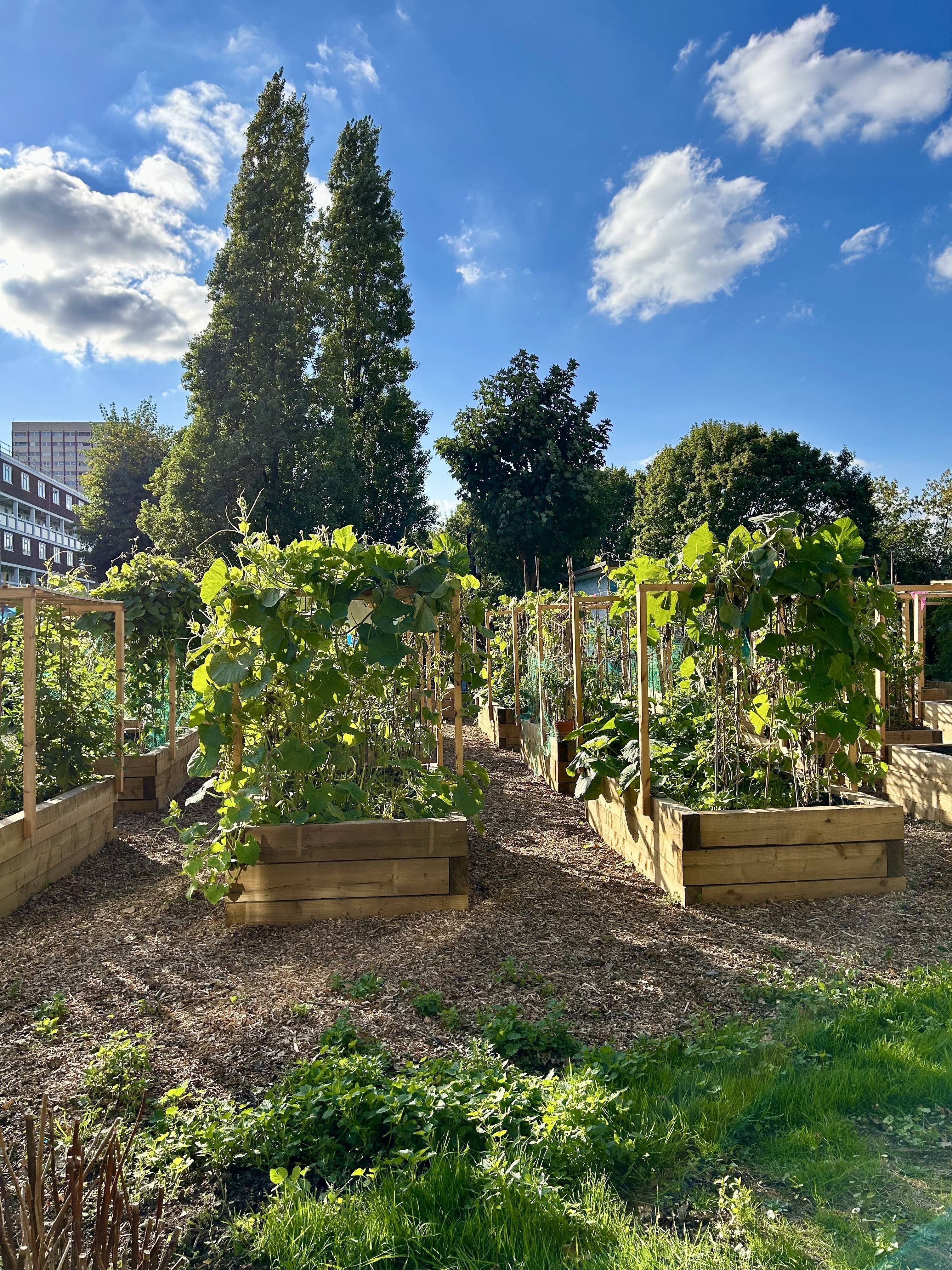
The Nature Reserve is open for everyone to explore the medicine garden, ponds, woodland, and mushroom farm. It’s also a good time to meet the site team and hear how to get involved as a Friend of the Bethnal Green Nature Reserve.
Monthly Schedule 2026
The Nature Reserve is hub for learning and wellbeing throughout the week with several local organisations in residence.
Mondays: Rangers Kindergarten Forest School
Tuesdays: Rangers Kindergarten Forest School
Wednesday: Mission GP Practice Social Prescribing
Thursday: Stephen Hawking School Nature Club
Friday: Forest Friday After-school Club
Misery: 12pm-3pm, 1st Saturday of each month
Mobile Apothecary: 7pm-8pm, last Sunday of each month (except August, December)
Please get in touch if you would like more information when planning your visit.
Our Objects
The objects of the CIO are to promote, for the public benefit, the preservation and care of the flora, fauna, and fungi of the Bethnal Green Nature Reserve as a place of ecological, educational, and cultural interest, both locally and more widely, with a focus on biodiversity enhancement, learning, health, arts, participation, and research.
Charity number 1166648.
The Bethnal Green Nature Reserve is a rare and extraordinary place. An old bomb-site that has gone back to nature, it has been nurtured and preserved over time by local people who have seen it not as waste ground, but as an urban haven for biodiversity.
The Bethnal Green Nature Reserve has been a resource for educational groups, for environmentalists and - over the past eight years - the base for the ‘Phytology’ medicinal field, enhancing the biodiversity of the extensive site.
History
The Phytology medicinal field is situated within the north west corner of the Bethnal Green Nature Reserve. The area’s rural past is now invisible through most of the borough. The Bethnal Green Nature Reserve is a rare example of a place where it is still possible to have a sense of continued history.
Records and old maps show that fields, market gardens and nursery gardens persisted here from mediaeval. In 1717 records describe the area as ’47 acres of meadow and pasture’. When industrialisation arrived in the 19th Century it brought urban poverty with it and an end to rural Bethnal Green.
In 1839 the Bishop of London called it ‘one of the most desolate parishes’. He undertook to build ten new churches and in 1842 the acreage was bought and work on St Jude’s began. The church took four years to build and finally opened its doors in 1846. It was a grand church, big enough to hold one thousand worshippers, and performed an active social functions with library, food kitchen, institute and school.
In 1940, during the Second World War, it was bombed and totally destroyed. The ruins of the complex remained untouched for years gradually becoming wilder and wilder.
Eventually a few local people – including a core group of mothers who were home-schooling their children – realised its value. Helped by the Environment Trust they started to clear the land.
In the 1970s the Tower Hamlets Council decided to fence the site in and lock it up to protect the area from fly-tipping. In the late 1990s the local Teesdale and Hollybush Tenants and Residents Association became the site custodians and, with the support of Tower Hamlets Council, took responsibility for St Jude’s as it was still called locally. They have been caring for it devotedly ever since.
Since St Jude is the patron saint of lost causes they changed its name to the more hopeful (and appropriate) Bethnal Green Nature Reserve. Plants grown today in the Nature Reserve as part of Phytology have a similarly long history. Our planting scheme would have been recognised by the Old English Herbarium that was translated from a 5th century Latin text in around 1,000 AD. A widely used text, it detailed the medicinal use of plants and continued to be popular in Britain and across Europe for centuries. Its lessons have long been part of traditional knowledge.
Our Governance Policies
- Child Safeguarding Policy
- Adult Safeguarding Policy
- Anti-Racism Policy
- Equal Opportunity Policy
- External Complaints Policy
- Code of Conduct
- Volunteer Management Policy
- Health & Safety Policy
- Social Media Policy
- Data Protection Policy
- Recruitment Policy
- Internal Grievance Handling Policy
- Financial Reserves Policy
- Financial Controls Policy
- Whistleblowing Policy
- Trustee Job Description
- Bethnal Green Nature Reserves Constitution