
'How To Build A Clay Pond'
by Edward Simpson
Why Build A Clay Pond?
In 2024 Bethnal Green Nature Reserve and the Hollybush & Teesdale Tenants and Residence Association started a food growing space called Bethnal Green Ecology Garden. We wanted to start a garden that supported both wildlife and local food growing, highlighting the importance of biodiversity to growing food and to community wellbeing. We were awarded funding from Grow Wild, the national outreach programme of the Royal Botanic Gardens, Kew, which allowed us to introduce the elements of habitat into this garden.
When planning the garden, we wanted to add a pond to boost biodiversity and support wellbeing through people’s proximity to wildlife and water. There is already a pond at Bethnal Green Nature Reserve, and we wanted to extend this wetland habitat so more species could thrive across a network of ponds in the area.
We knew there was a frog population in a nearby neighbour’s garden and decided to make a habitat that would hopefully encourage these frogs to visit. Frogs would be a welcome addition to the space’s biodiversity as they help to control slugs and other insects that may eat the food grower’s crops. We chose clay as the pond-lining material because we wanted to avoid adding more plastic to the soil, which in urban areas are often contaminated. A clay pond, when it eventually reaches the end of its life, will leave no harmful trace behind. Plastic- lined ponds will eventually degrade leaving harmful pollutants in the soil for generations to come.
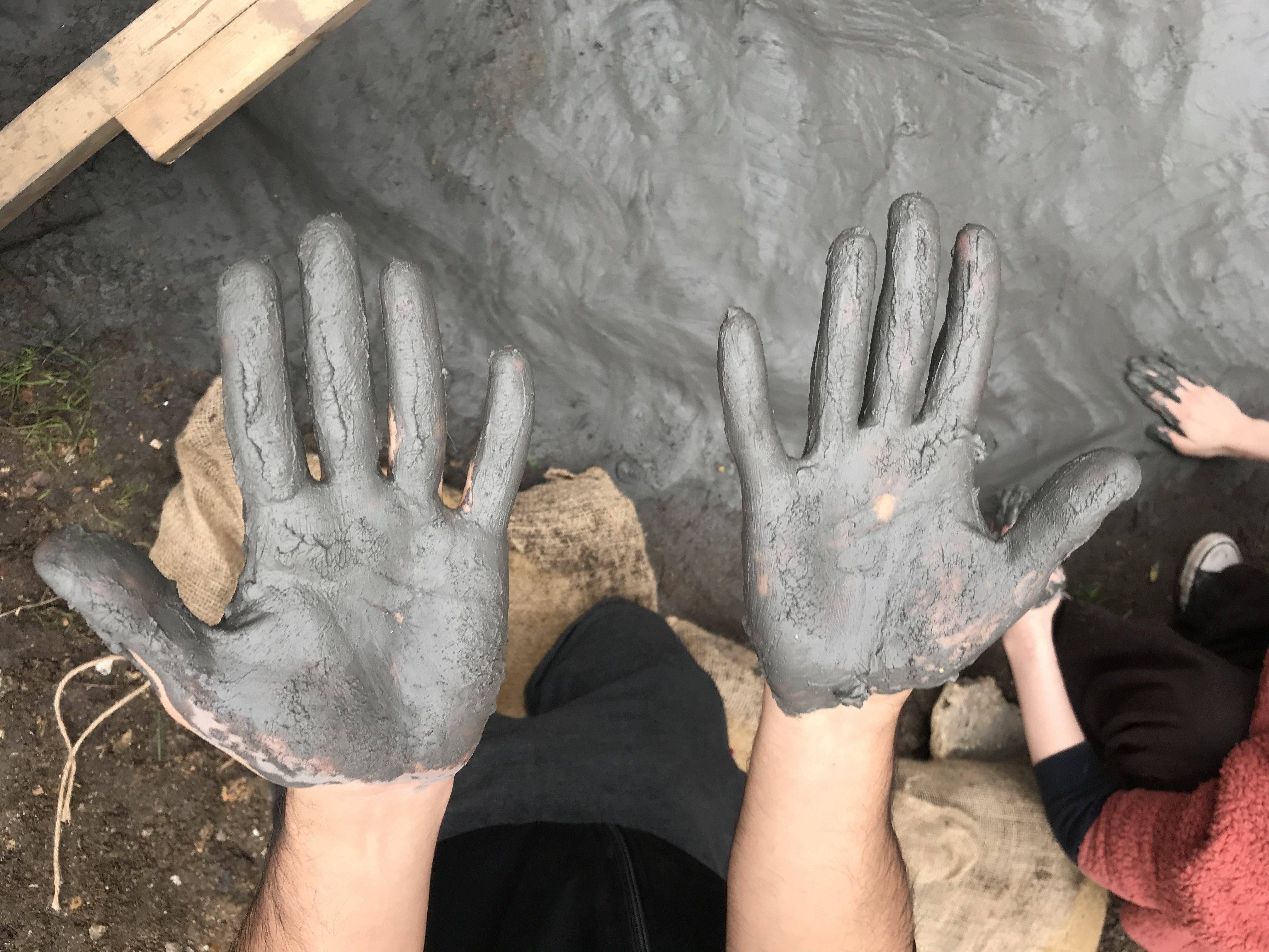
When clay is puddled, meaning that it is compressed and manipulated into a consistency where it will hold water on its surface, it behaves similar to a plastic liner or fibreglass pond.
We were also curious to experiment with clay because it’s a traditional pond-building material, but there is surprisingly little practical information easily available on how to make a small scale clay pond. By documenting our process, we hope to encourage others to consider clay as a sustainable, low-impact alternative to plastic lined ponds.
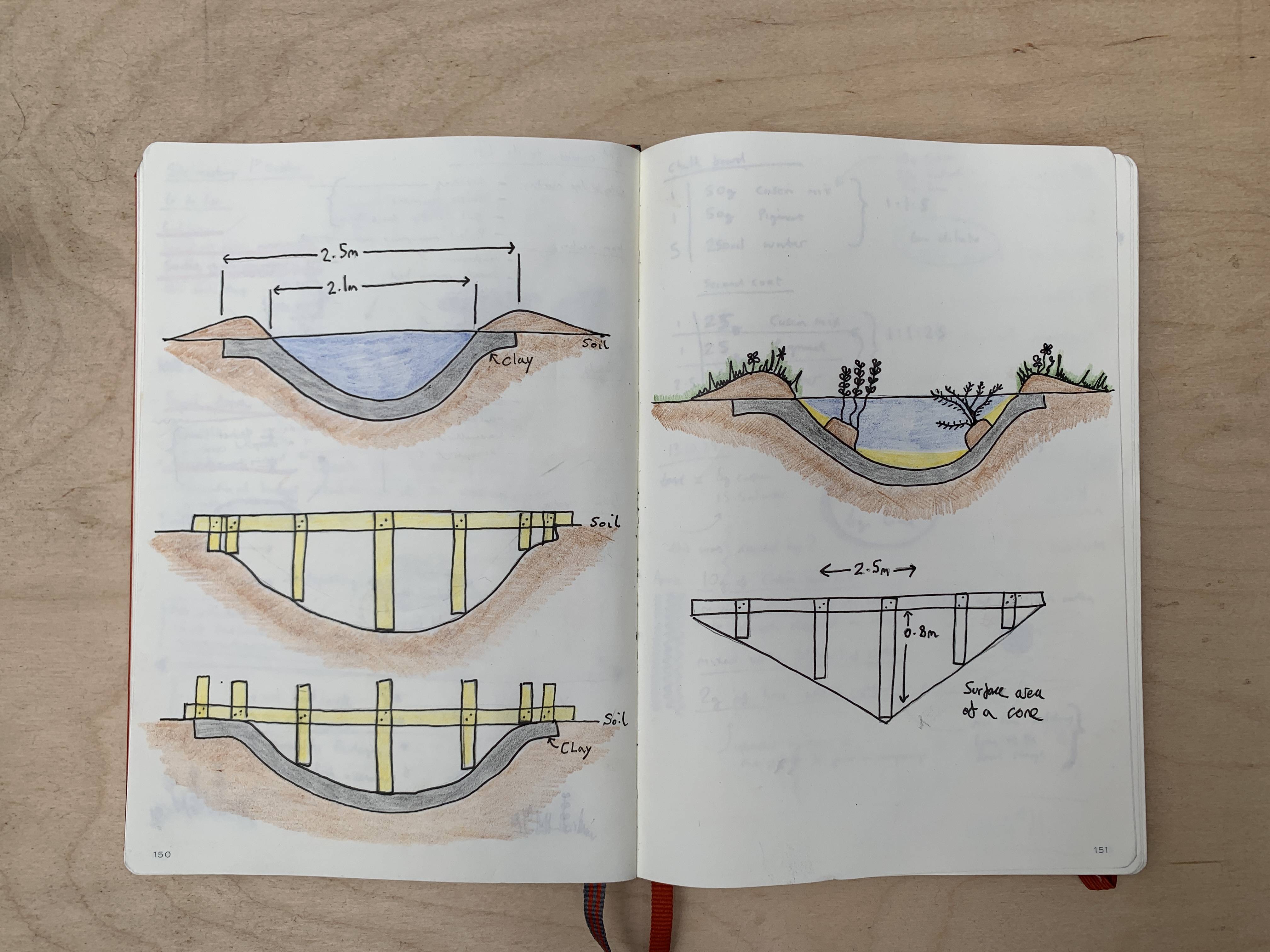
We wanted to make sure the pond would serve local wildlife well. Pipistrelle Bats and Common Frogs were key species for us, but we were also looking at a whole network of wildlife and community interactions from mosquitoes that would attract the bats to algae for tadpoles to eat.
Common Frogs were selected as a target species because of the reason above and Pipestrelle Bats because we wanted to support the healthy population we already have in Bethnal Green. These bats also help our food growers by consuming up to 3000 insects a night!
For Pipistrelle Bats, which drink on the wing, at least 2.1 metres of clear water is needed. For frogs, our research showed an ideal depth of around 0.6 metres. To make the calculations simple and material use efficient, we decided on a circular, cone-shaped pond. The final design was 2.1 metres in diameter and 0.6 metres deep at the centre.
As the clay layer needed to be at least 200mm thick, the hole we had to dig would need to be larger to take this measurement into account.
We positioned our pond in full sun, this is good for many plants and animals, as the water warms up faster. It is also beneficial to have some shade on the pond to help with rapid evaporation and algae growth, which can take over in hot weather. If in the future we find the full sun to be detrimental we will grow some taller plants around the edge to shade the pond during the hottest part of the day.
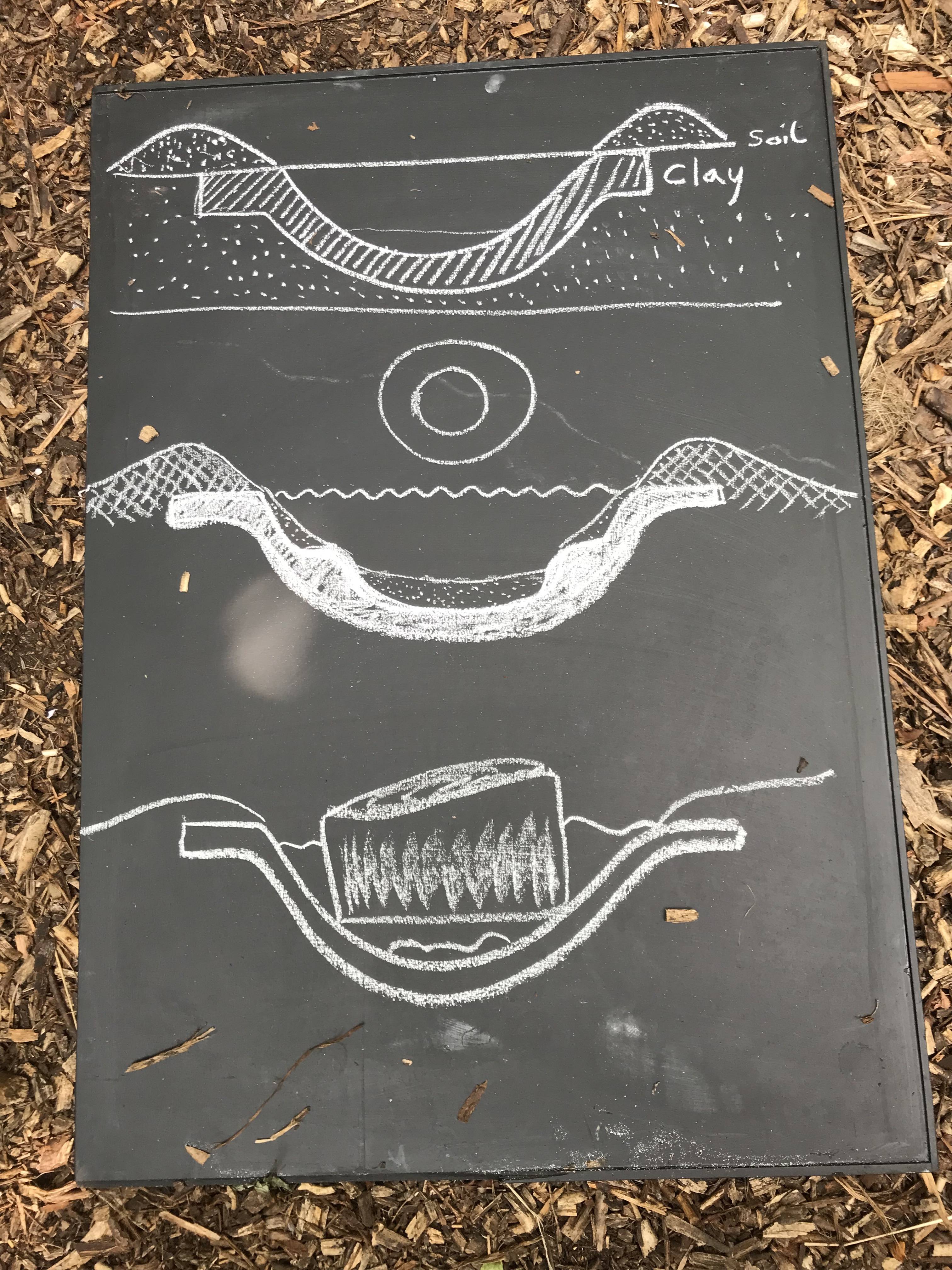
The photos above show initial sketch book designs for the pond and a chalk board explaining the process from a volunteering session.
The Making Process
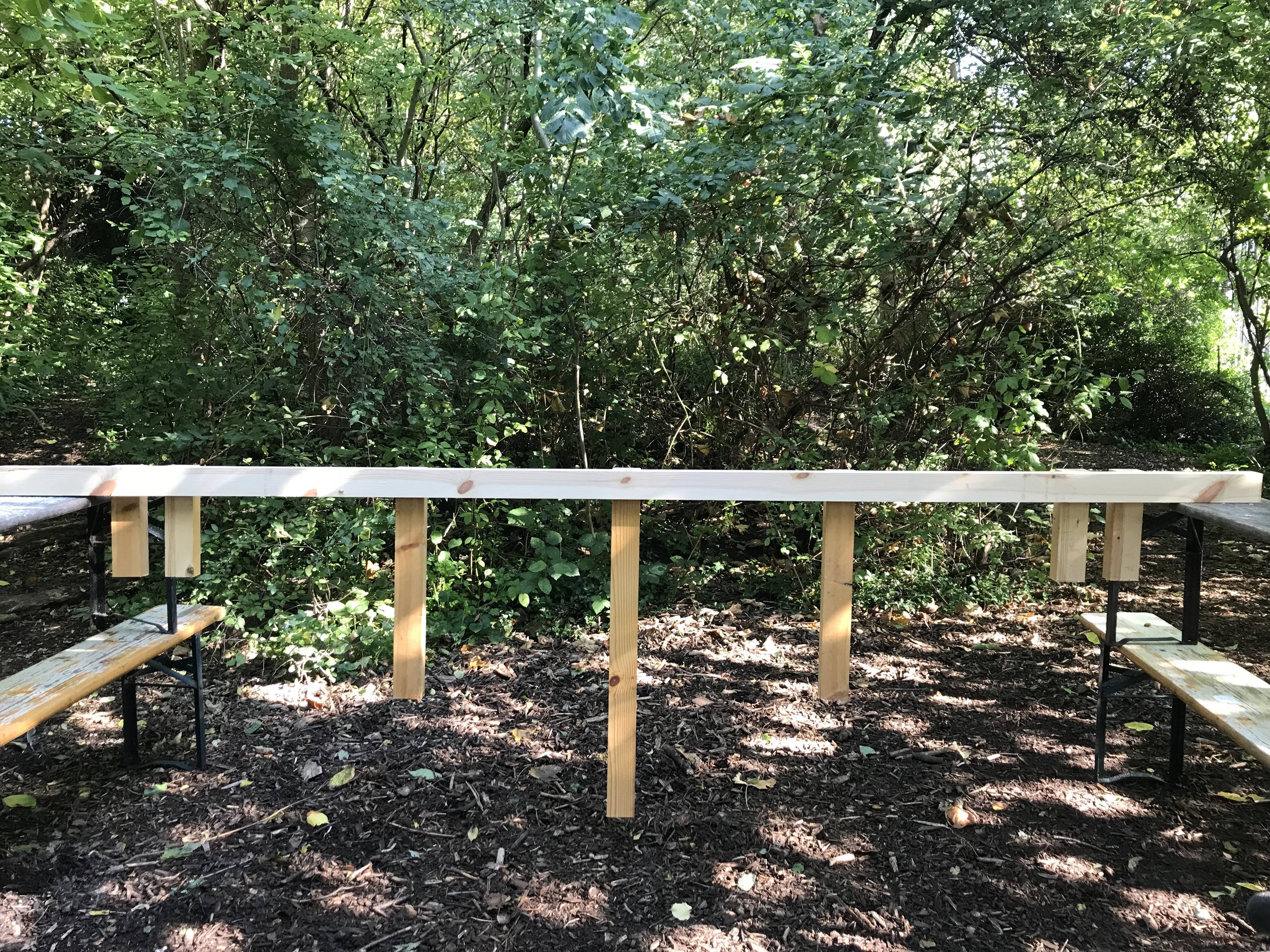
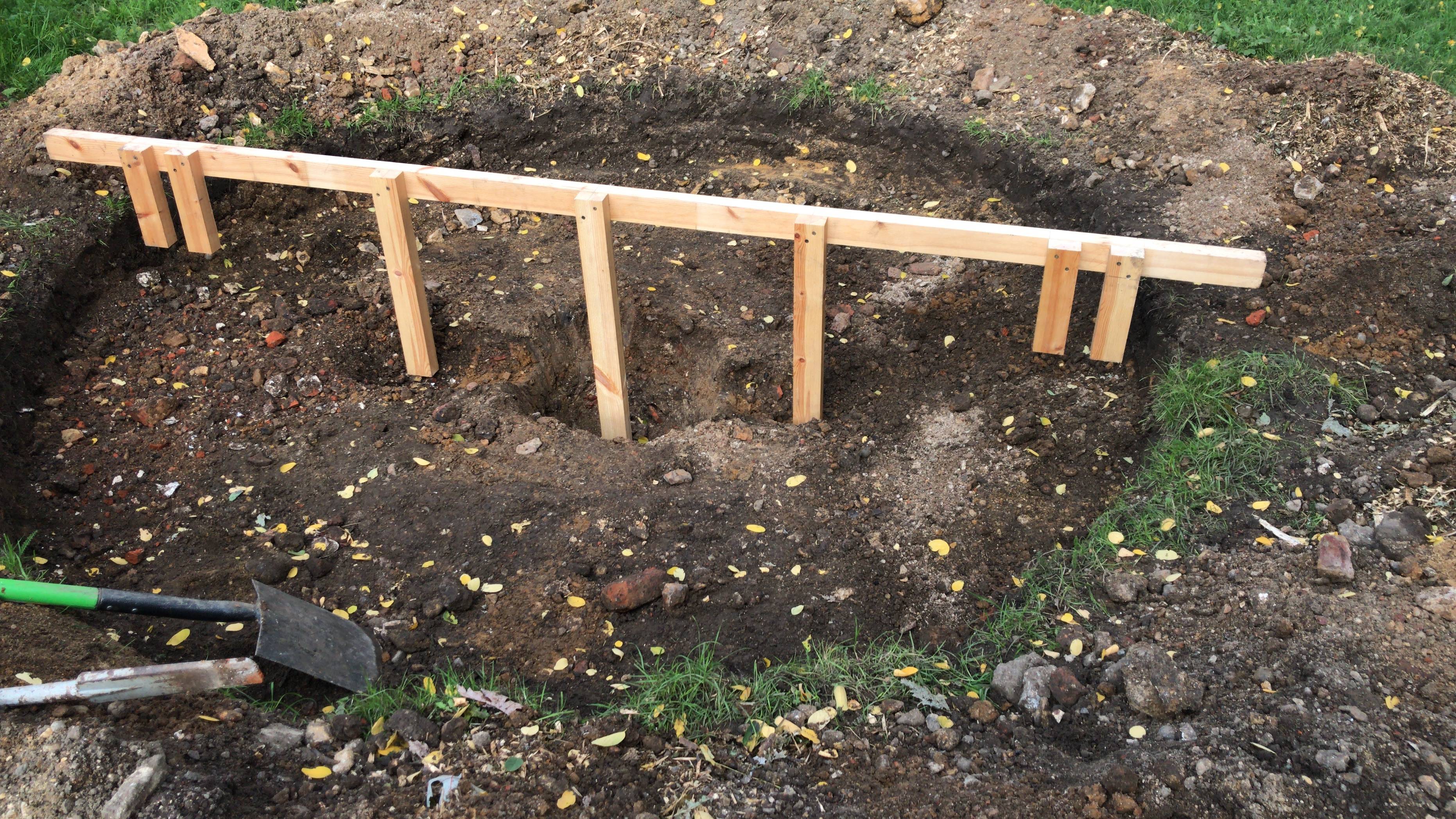
Depth Gauge Tool - We realised it would be hard to measure the thickness of the clay layer as we worked, so we built a simple tool to measure the pond’s depth at each stage. In the photo, the tool is set to the maximum depth we planned to dig. Once we reach this depth, the vertical bars are moved up in 100mm increments to measure each layer of infill until the correct final depth is achieved.
The first photo shows the depth gauge with its horizontal bars fully extended, the middle bar reaching down 800mm. The second photo shows the same gauge with the horizontal bars raised up by 200mm measuring the final depth of the pond during the clay puddling stage.

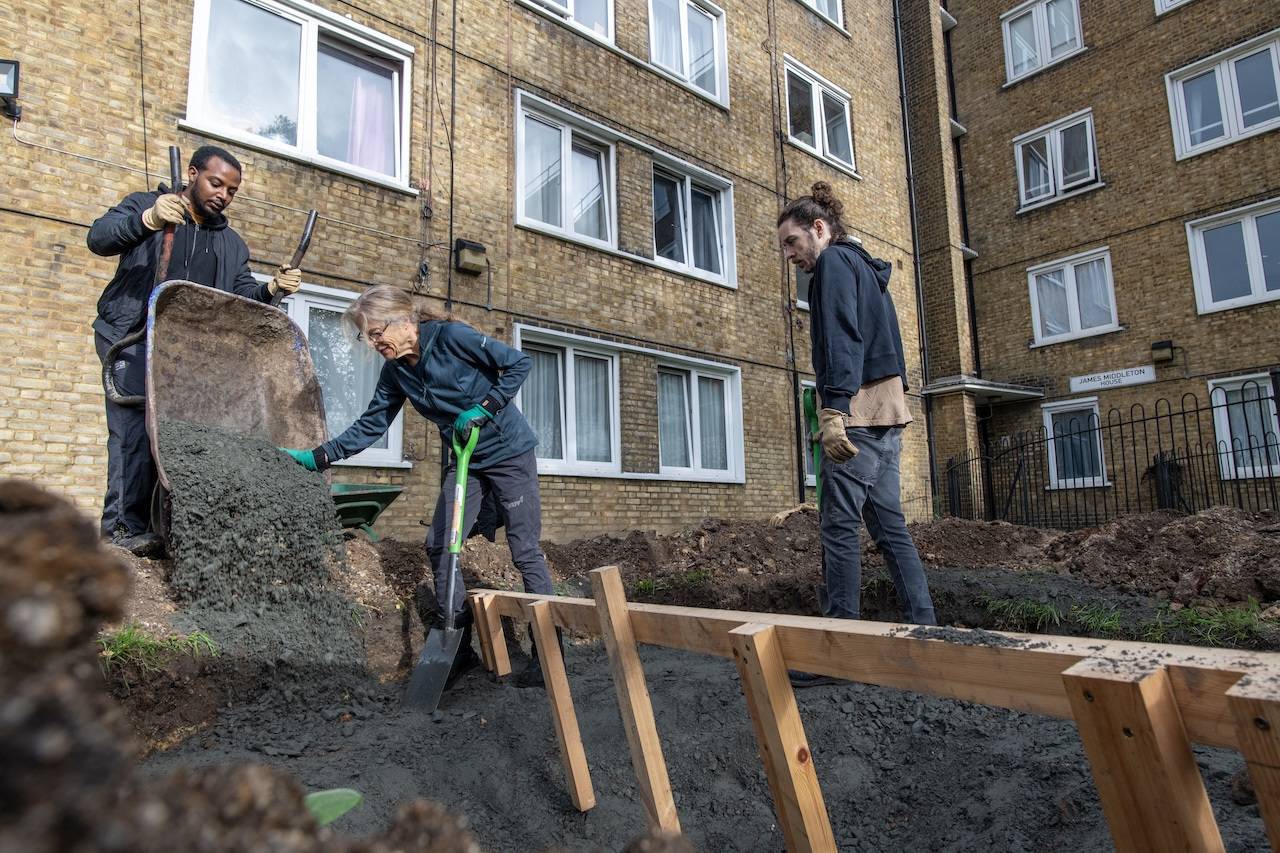
Digging the hole
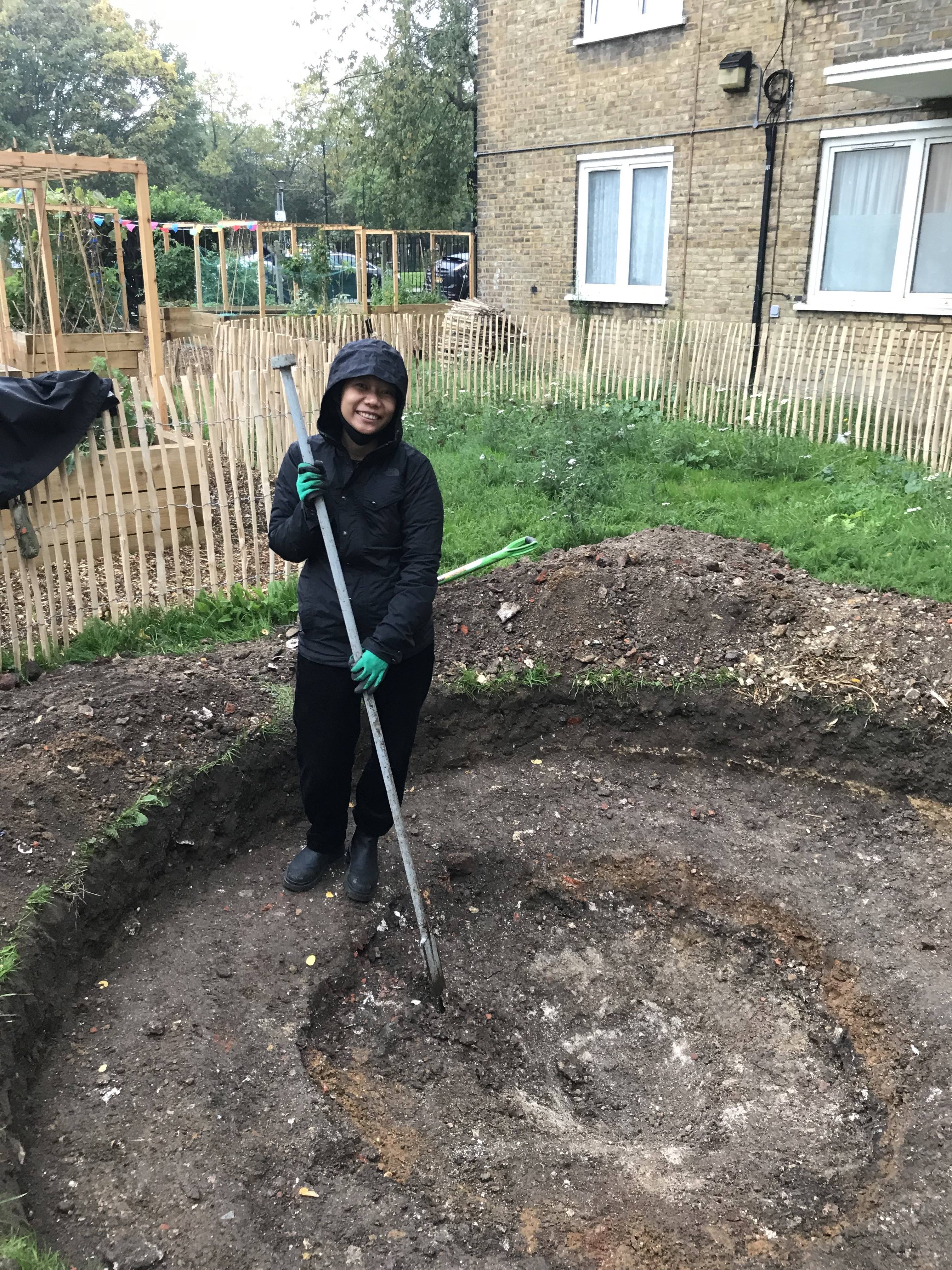
We dug the hole to the initial 800mm depth we intended and then decided to go a little bit deeper to include a layer of MOT (crushed stone aggregate) before adding the clay liner.
MOT layer
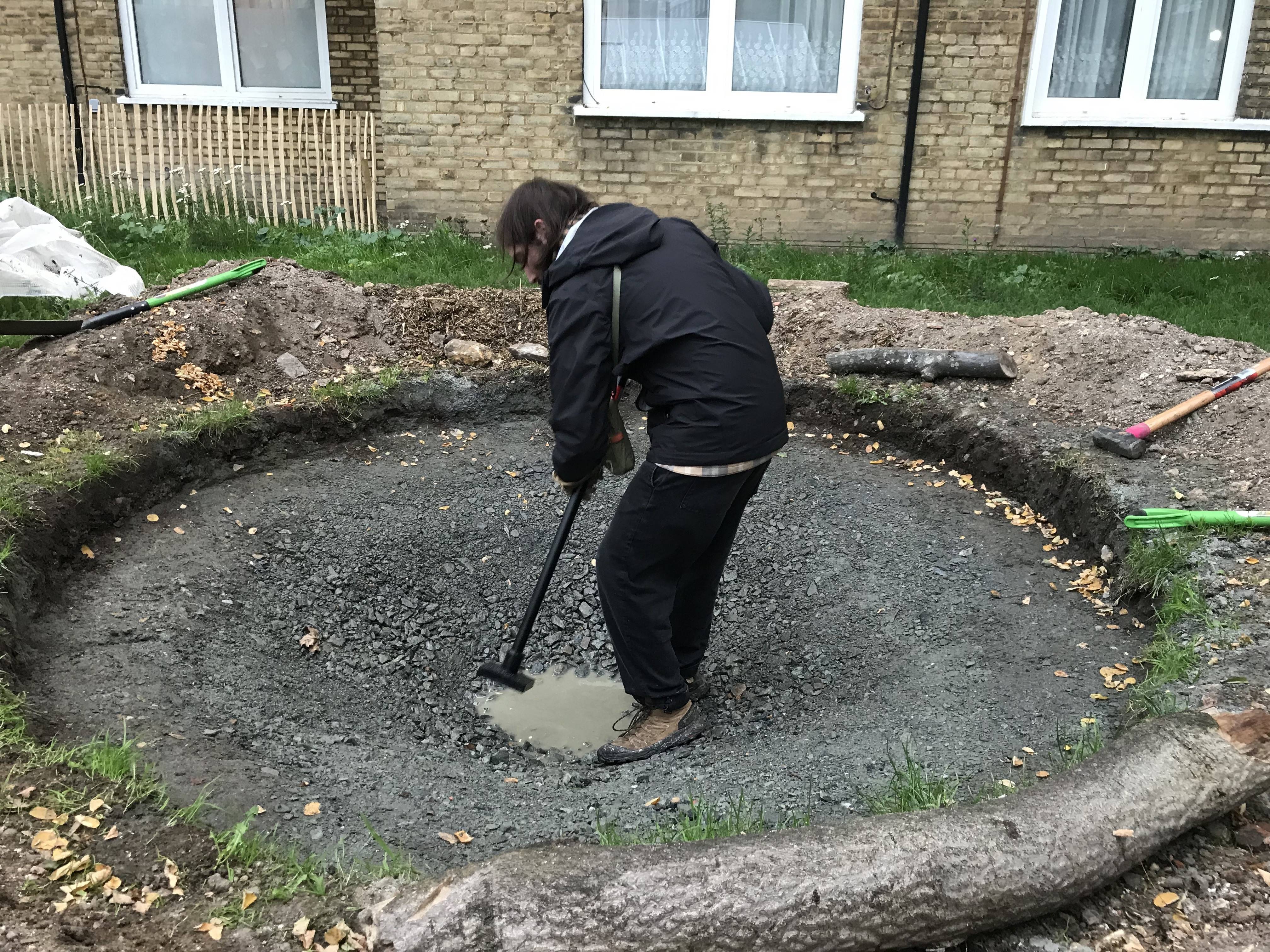
The soil on site was quite crumbly with a inconsistent texture, and we thought the clay would adhere better to a compact MOT base. MOT is easy to shape and compact, helping form a stable surface before puddling the clay. It was tamped down firmly to prevent crumbling and to slow any future root or burrowing animal intrusion.
This page shows the various stages of digging. The ground was heavily compressed and full of building waste such as brick and concrete, we found that using a Digging Bar helped break up the soil before shovelling it out. In the final photo you can see the
layer of MOT being tamped down to form a good shape for the pond.
Photo Credit: Ines Stuart-Davidson © RBG Kew
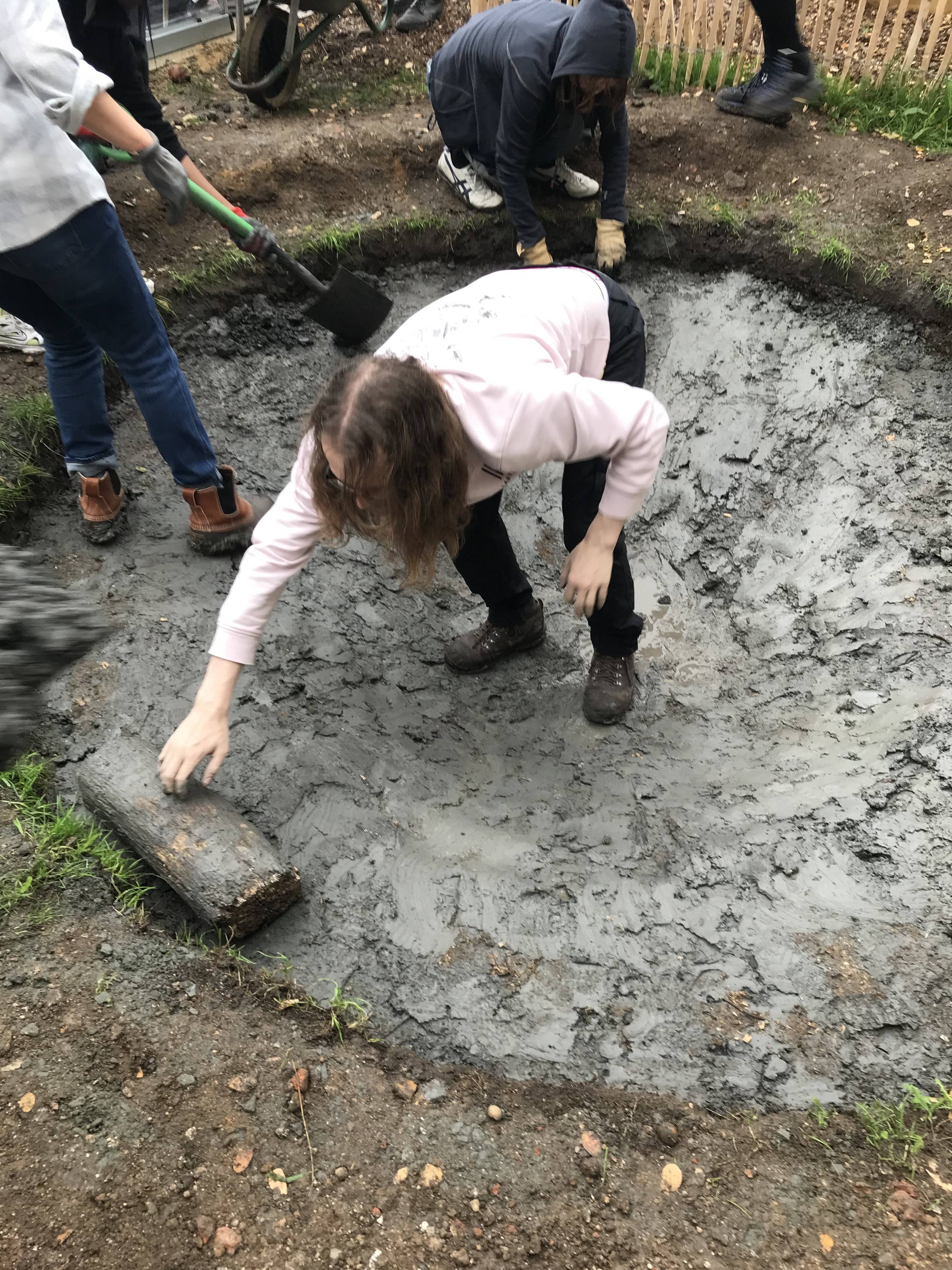
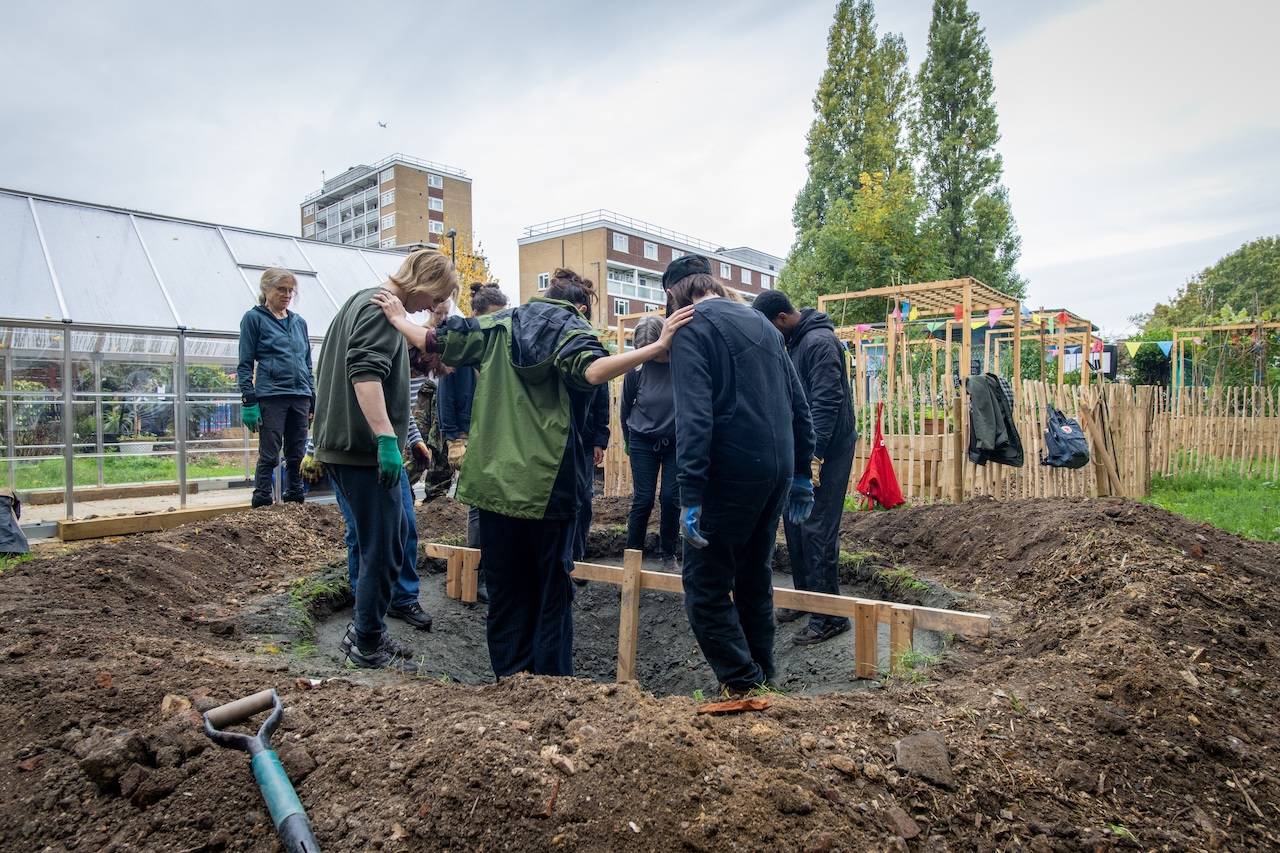
Puddling the clay
This was the part that would require the most experimentation. We used puddling clay which is also known as engineering clay.
It took a bit of trial and error to get the right clay consistency. Too dry and it was difficult to work and would crack; too wet and it turned to sludge. We found that clay slightly on the tough side worked best, as it compacted nicely and bonded with the previous layer. If it started cracking, we simply added a little water.
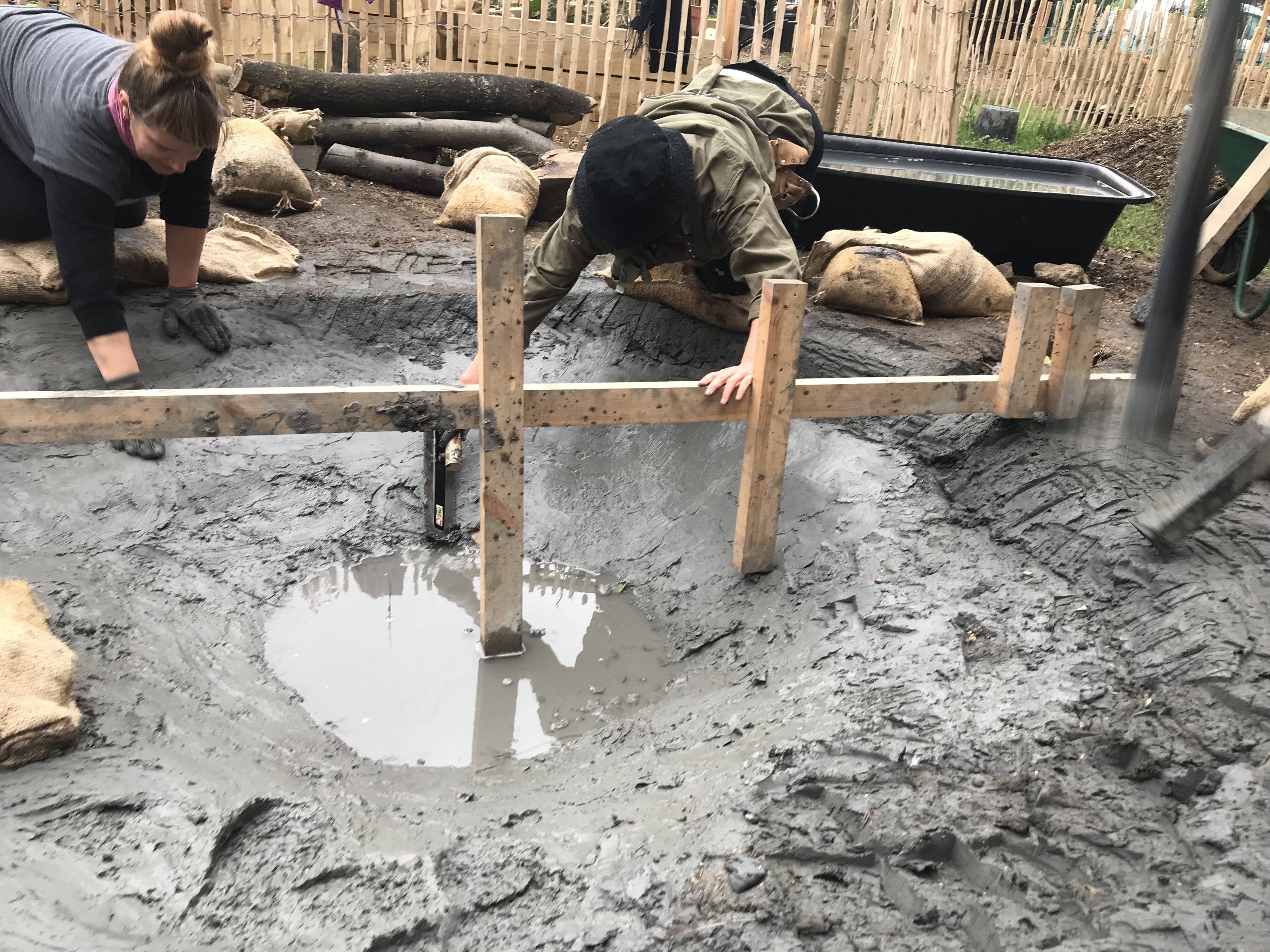
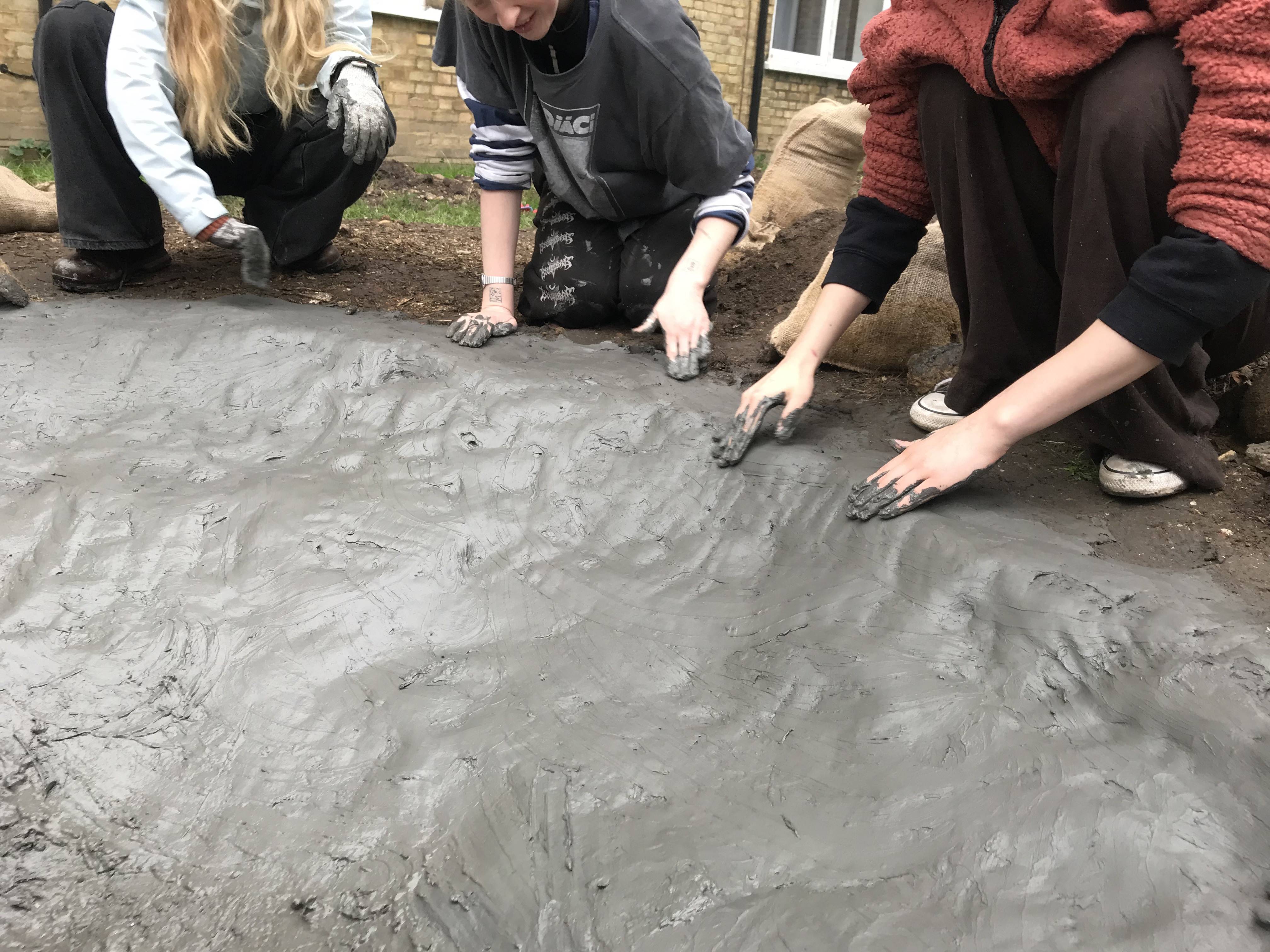
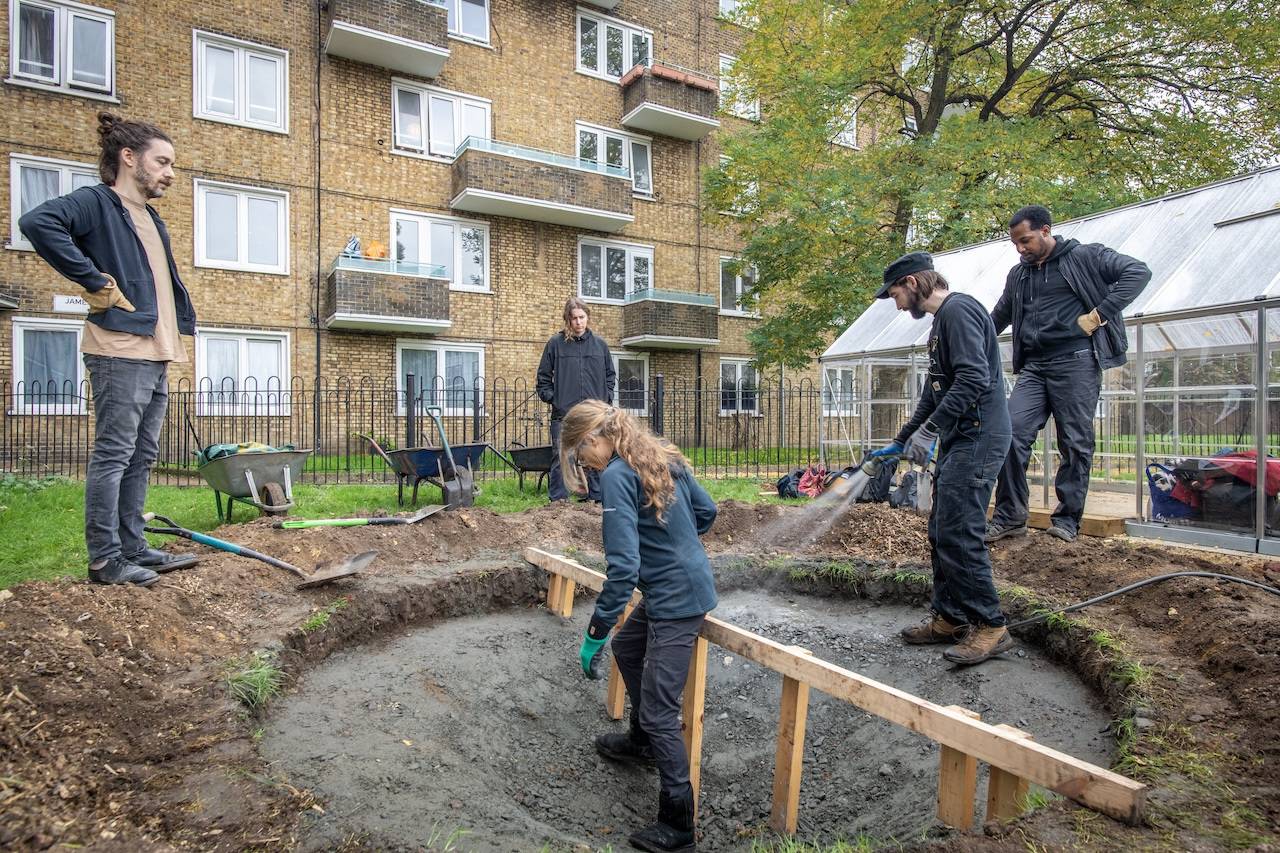
We used a tamper, bits of wood, and sometimes just our feet to compact and blend the clay. The depth gauge helped us keep the layer thickness on track. Once the pond was lined, we shaped the inside to look more natural, then polished the surface by hand to seal it.
Overspill
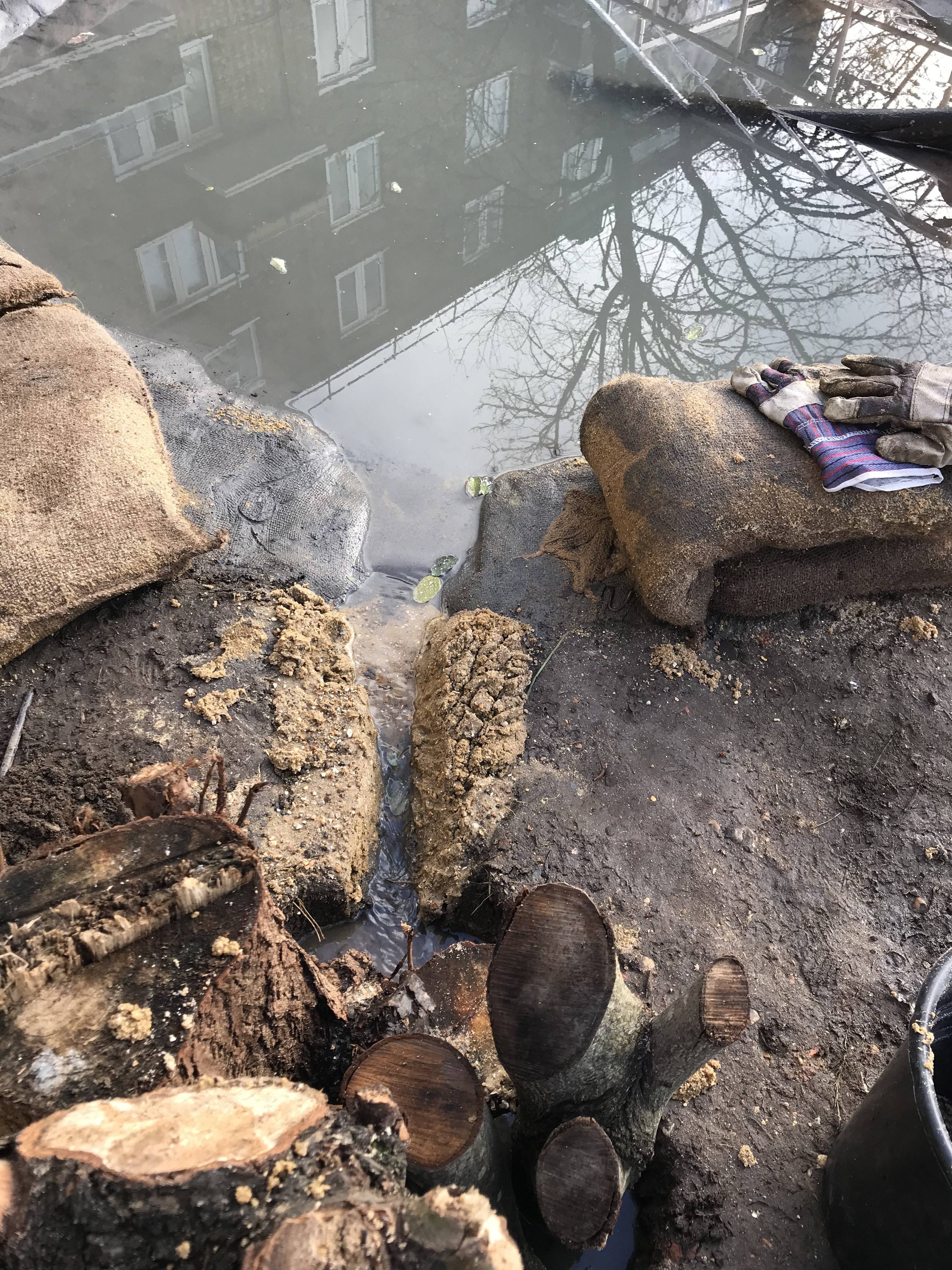
We created a low point at the pond’s edge so that in heavy rain, overflow water would drain in a controlled direction. From this point, we dug a shallow overflow trench, filling it with logs and stones to create a frog habitat. The secondary benefit of this is that the logs slowly decay in the ground and improve the soil condition, meaning it will be less prone to flooding in the future by being able to hold more water.
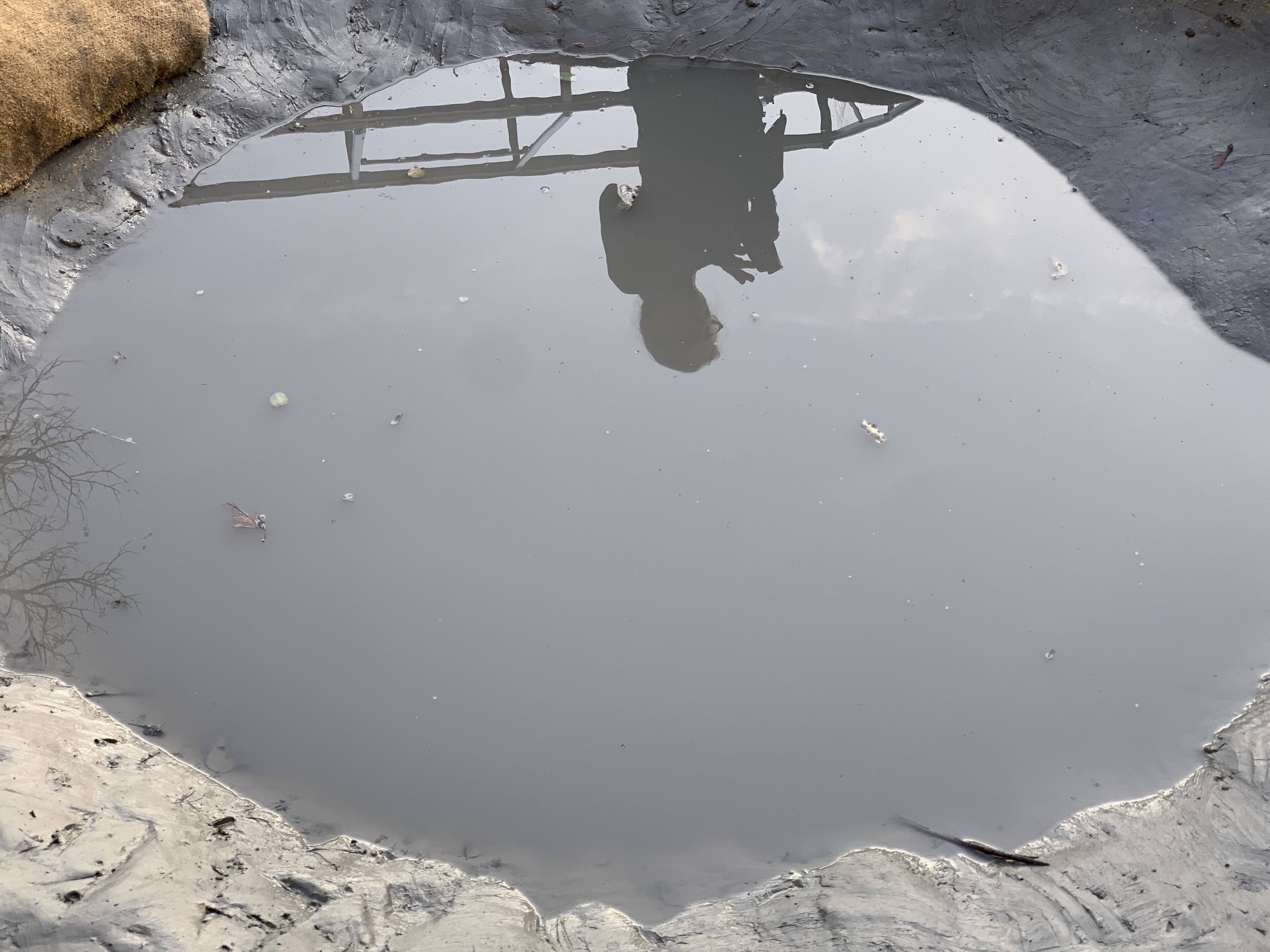
These photos show various ways in which we puddled the clay. By rolling logs, using planks of wood and our hands we formed the clay into shape. You can see the difference in texture from when the clay was first put down and when it has been compressed and polished.
Photo Credit: Middle left - Ines Stuart-Davidson ©

Backfilling
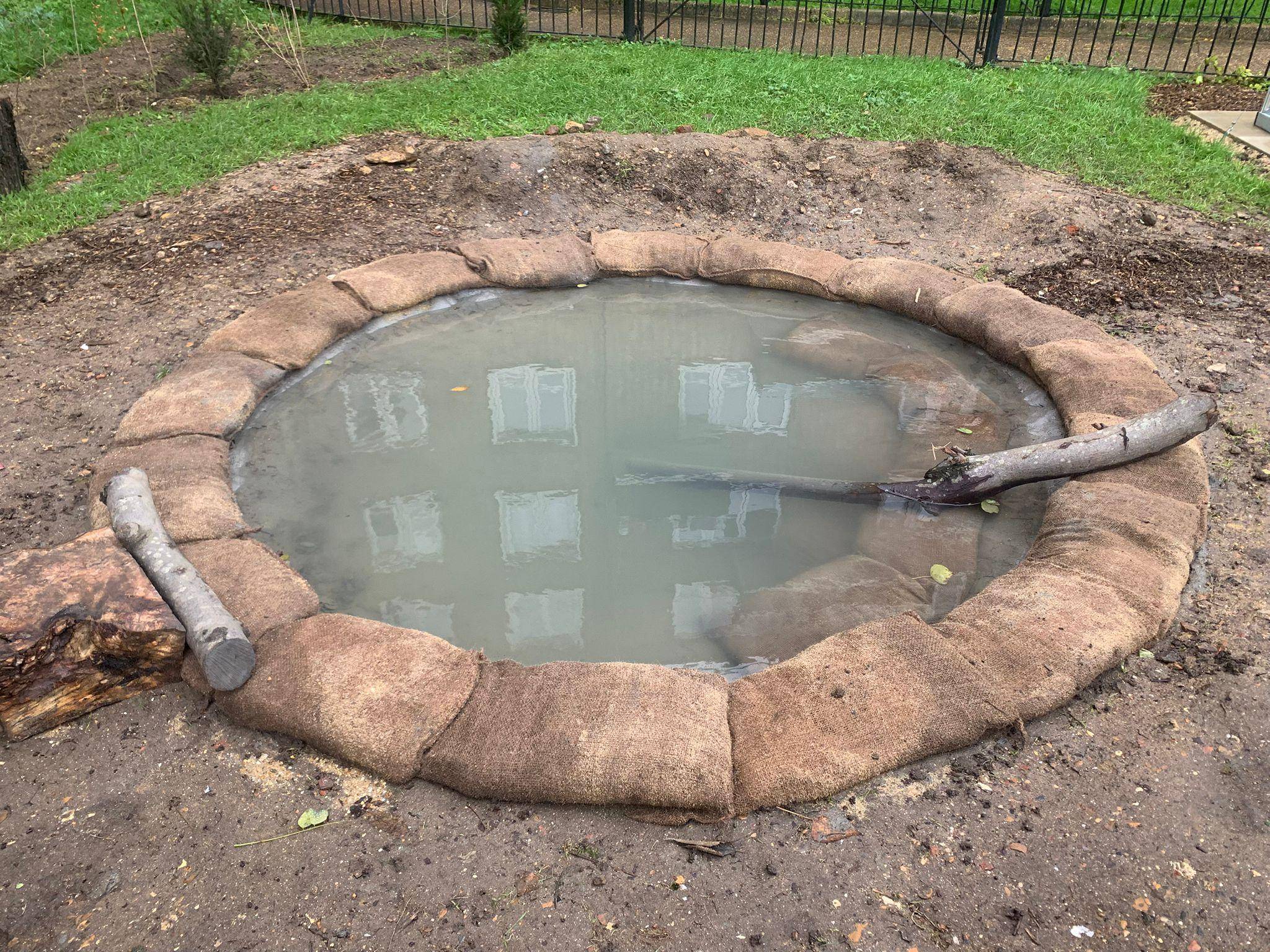
We used hessian sacks filled with sand and soil to cap the pond edges, this was to prevent the clay from drying out when it was not in contact with water. The reason for using hessian sacks was to make sure the solid didn’t erode into the pond before it had stabilised and plants had a chance to root.
We also made a ring of hessian sacks filled with sand and soil about 300mm below the surface. These served two purposes: they could be planted directly into, and they allowed sediment to build up over time, protecting the clay liner during low-water periods. At the start of this document you can see the sketch book diagrams that illustrate this idea.
The hessian eventually biodegrades and leaves behind the sand and soil mix. We would advise double checking that the sacks you use are 100% hessian and do not have any plastic in. We also put the sacks in the washing machine before using them to remove and residue oil on the fabric from their manufacture.
Filling with water
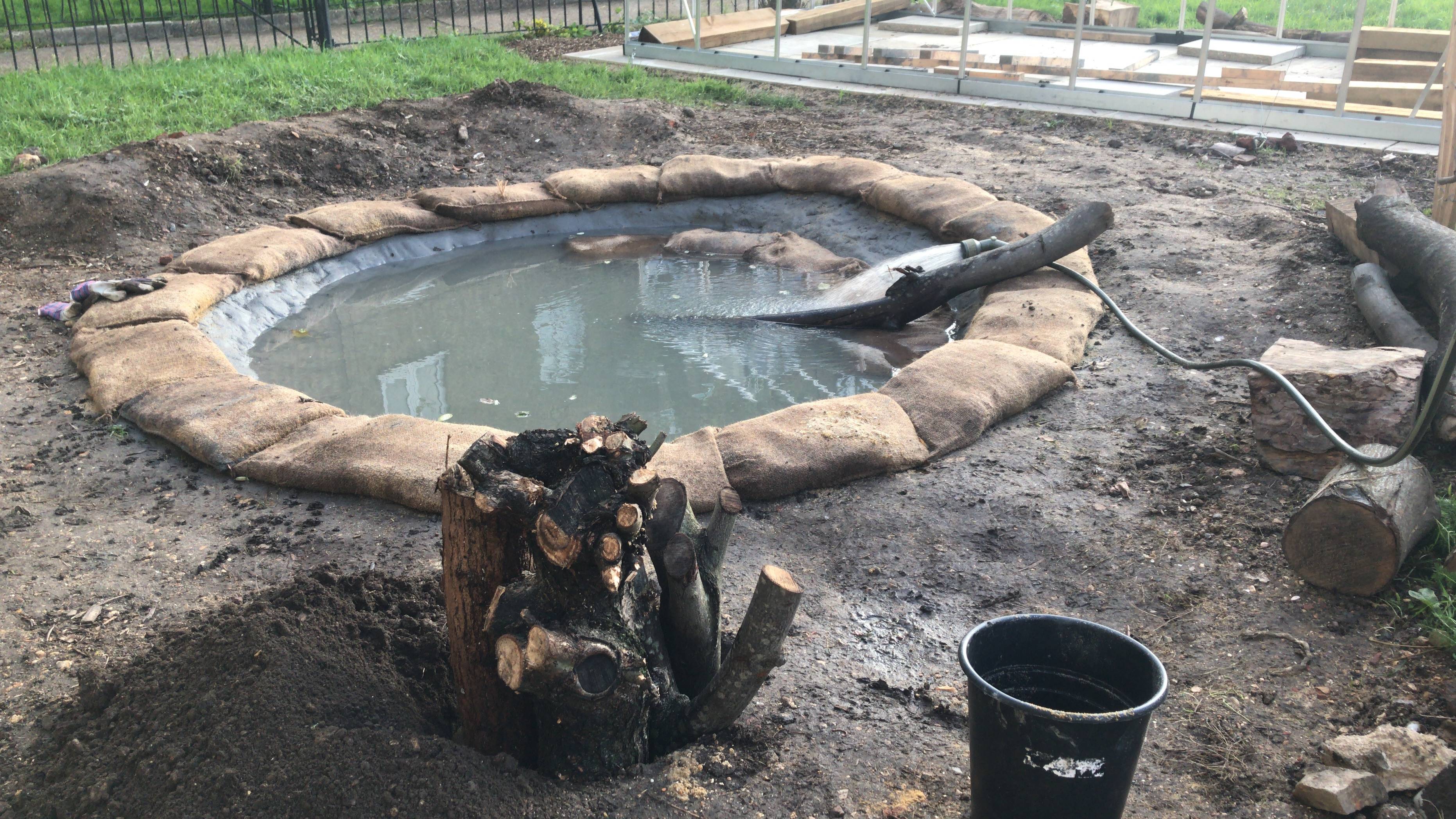
The ideal situation would have been to fill the pond with rainwater but we were worried that before enough rain came the pond would dry up. For the initial fill we used the hose as there was currently no aquatic life in the pond. Subsequently, when we needed to fill the pond up in the summer of 2025, when there was hardly any rain, we would fill up a tub of water and add Ecopond Chlorine Guard, an organic chemical that removes the chlorine and other harmful chemicals. This treated water is then siphoned into the pond.
You can see the start of the inner circle of sandbags in these photos. The inner circle was finished at a later date because it was easier to plant into the hessian sacks whilst they were on land and dry. The remaining sandbags were planted at a more appropriate time of year and lowered into the pond.
Plant selection
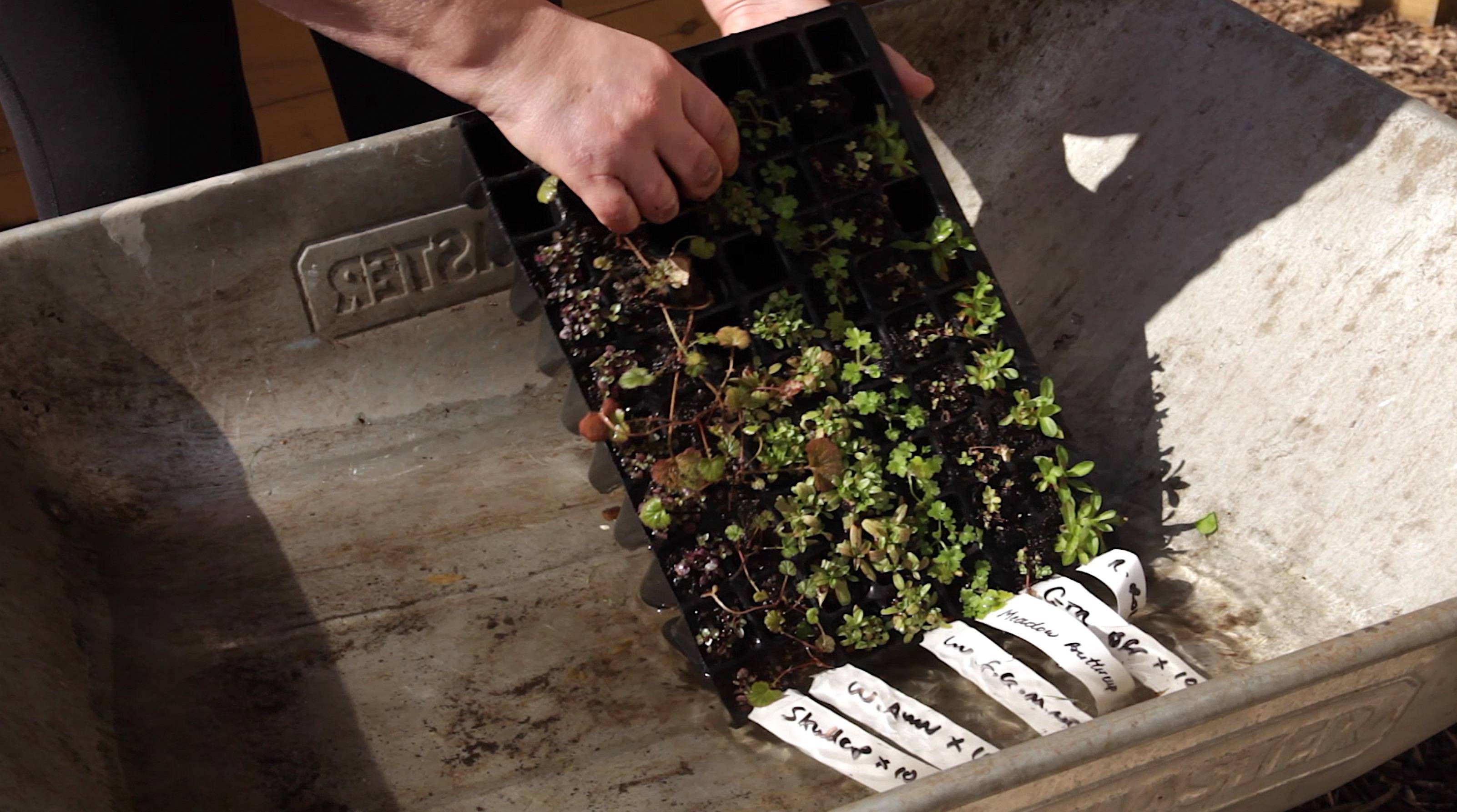
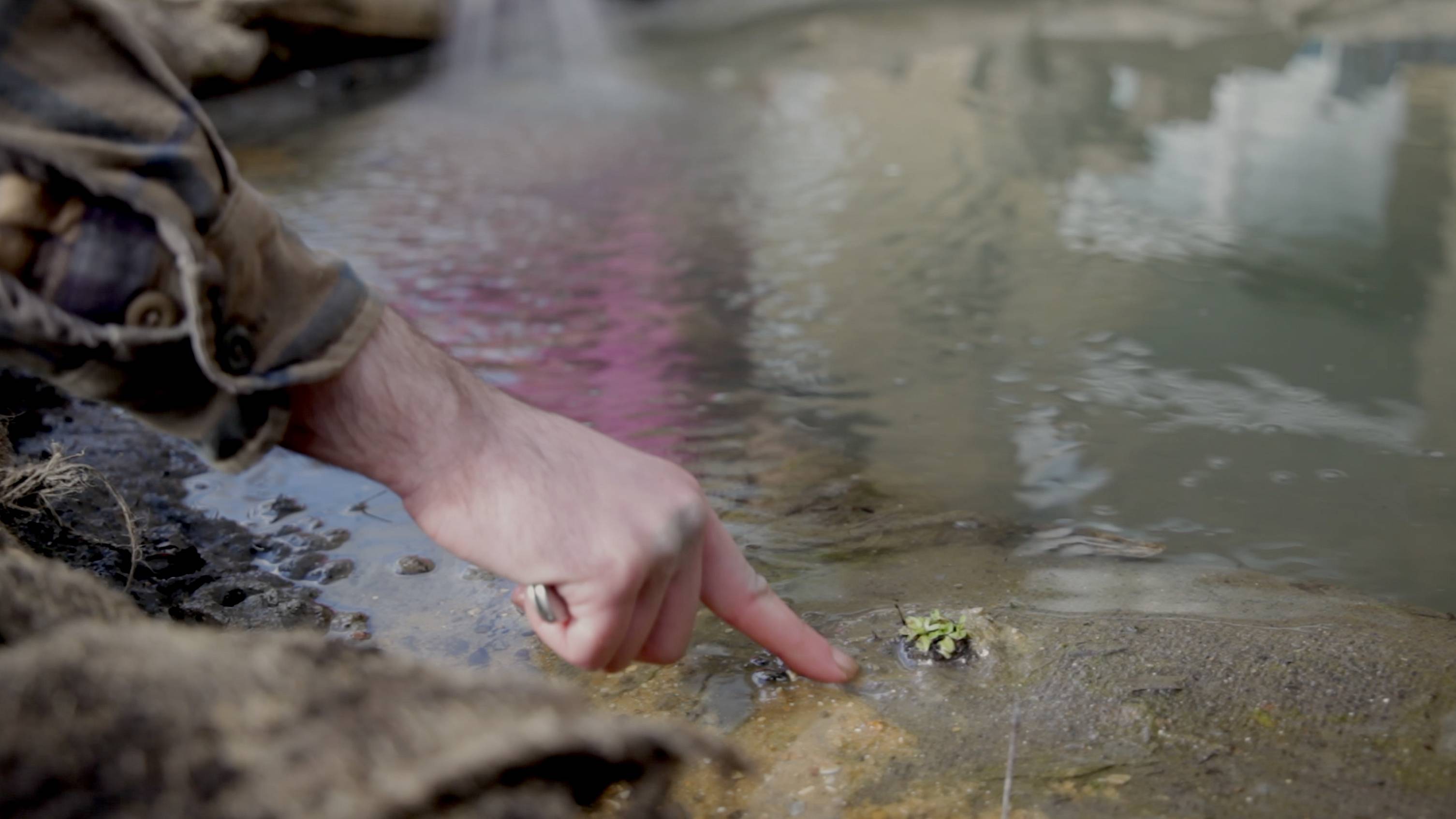
When choosing plants for the pond, we had to keep in mind that the clay liner was only 200mm thick, so we needed to avoid species with deep or aggressive root systems that might penetrate and damage the clay membrane. Information about root depth can be hard to find, but from experience with our previous pond, we already knew how some species behave.
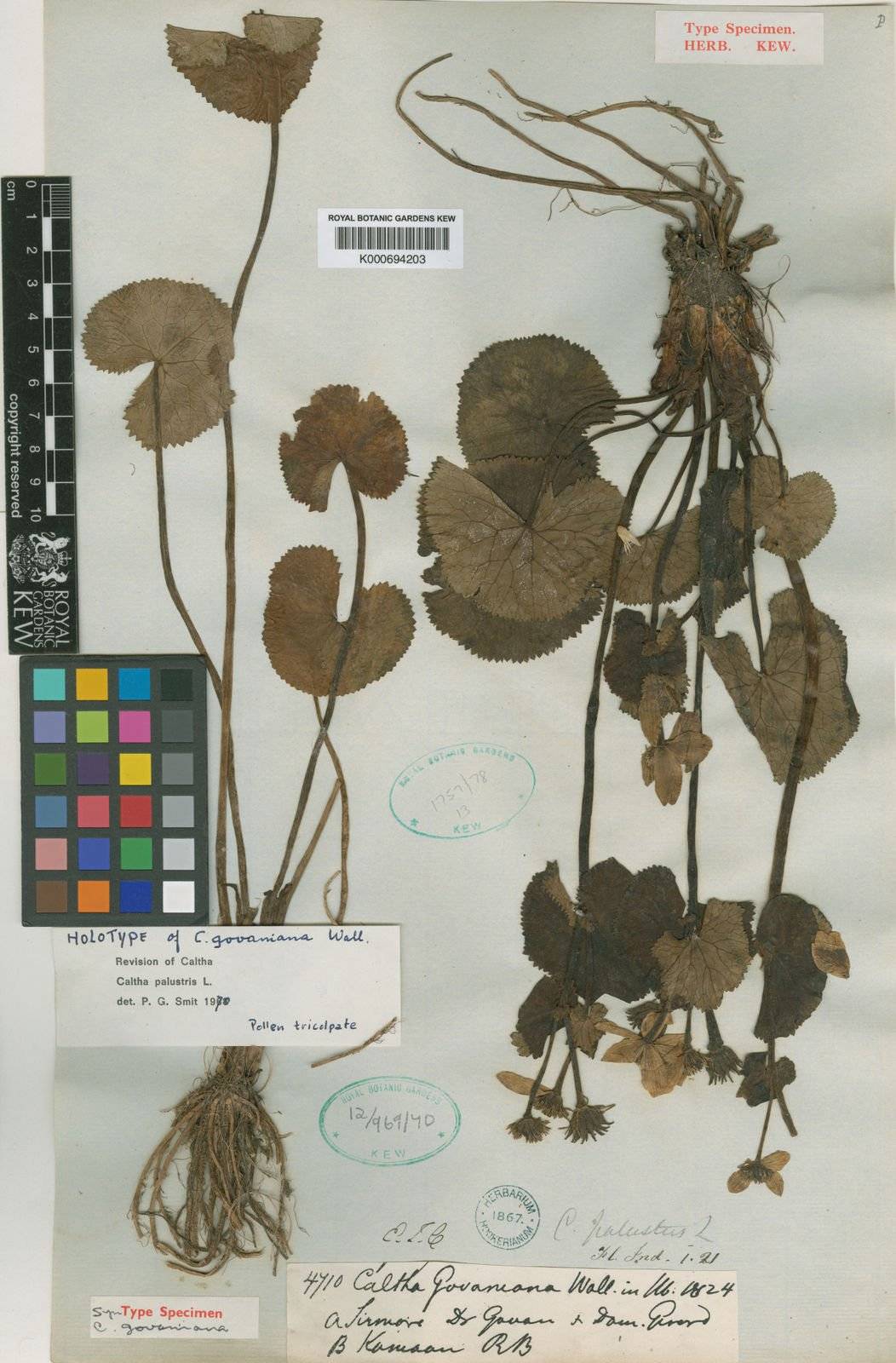
For example, Yellow Flag Iris has strong, penetrating roots which could potentially compromise clay lining. Watercress has fine, shallow roots that pose minimal risk to the clay. The Kew Gardens online Herbarium was a helpful resource for researching root characteristics and selecting species that would be both safe for the liner and ecologically valuable.
Our intention was to create a rich diversity of plant life in this habitat niche. The pond margins were the perfect place to plant a wetland style meadow and inside the pond we wanted to provide plants that would oxygenate the water, while providing shelter and food for aquatic life.
The idea was that the meadow flowers and grasses around the edge of the pond would create the conditions of a dew pond. This is where evaporated water condenses on the plants and drips back into the pond helping sustain a good level of water even in drier conditions.
For the pond edges, we chose a mix of native wildflowers often found in wet meadows:
- Ragged Robin
- Water Forget-me-not
- Meadow Buttercup
- Skullcap
- Greater Birdsfoot Trefoil
- Water Avens
For aquatic plants, we selected a variety of native plants that provide habitat, food and oxygenation to the pond:
- Water Starwort
- Water Crowsfoot
- Spiked Water Milfoil
- Hornwort
- Watercress
- Marsh Marigold
- Water Forget-me-not
- Bog Pimpernel
Photo Credit: Karolina Raczynski © copyright of the Board of Trustees
of the Royal Botanic Gardens, Kew.
Findings
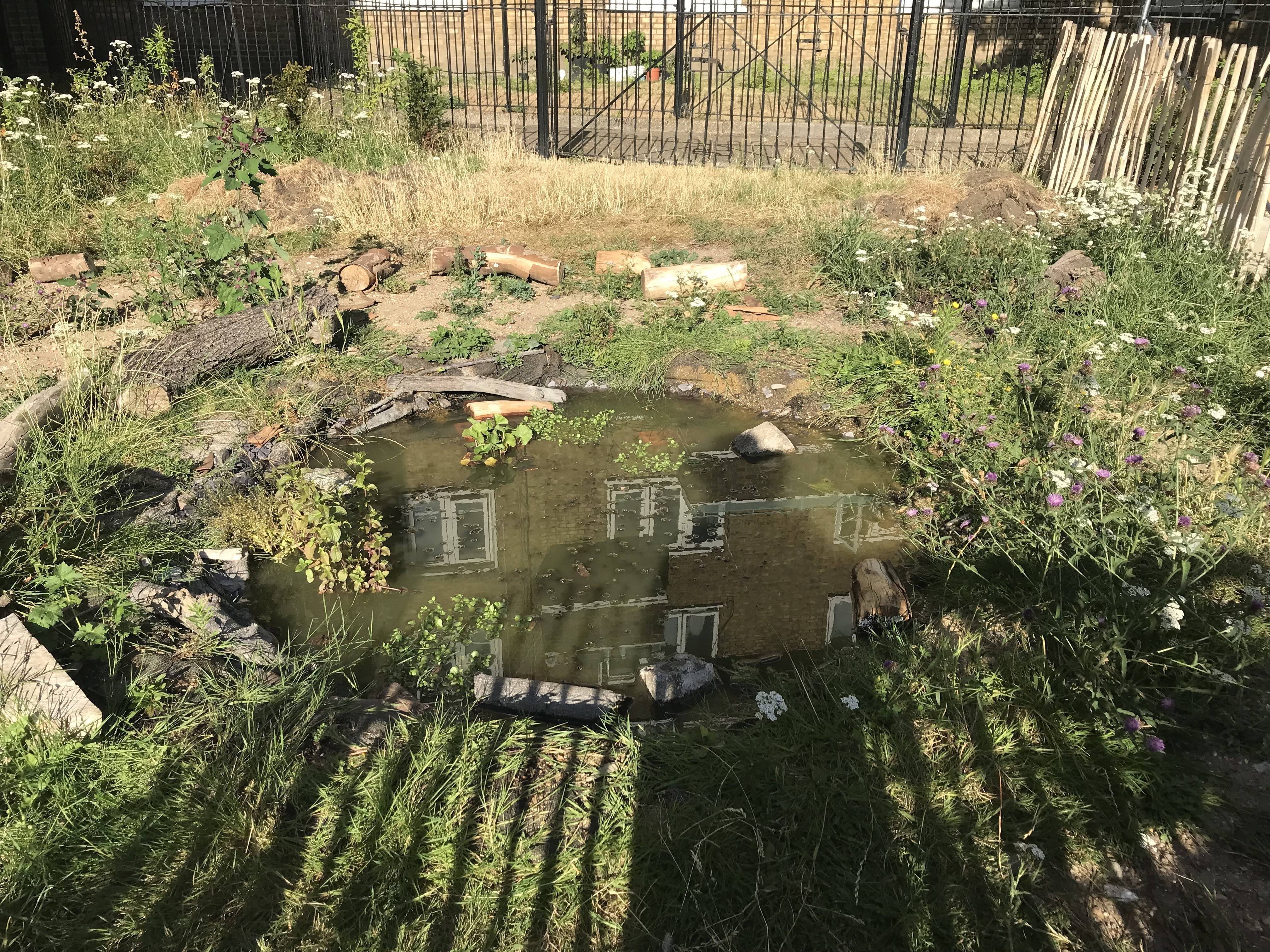
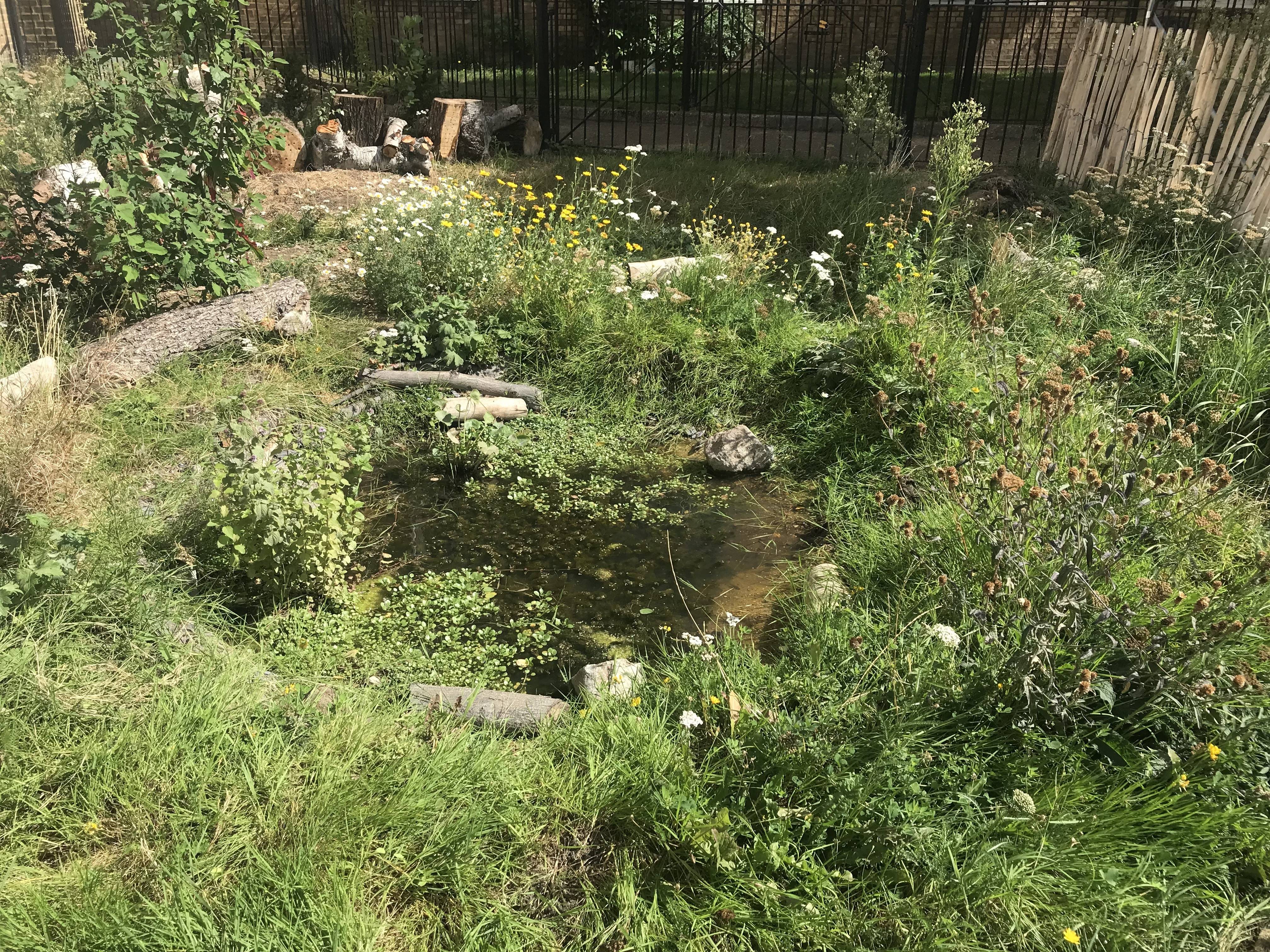
The pond has thrived in its first year. It held water well throughout the hot, dry summer of 2025 which is a good sign that the clay liner is working effectively. The water level sits slightly lower than we expected. With this in mind we’d recommend making future ponds a little larger than the final dimensions you want in order to accommodate the wildlife you would like to attract. The slightly lower level may be due to a south-facing section drying out and cracking before enough sediment had built up to protect it. Over winter, we’ll inspect this area and, if needed, re-puddle the clay to repair any weakness.
It’s been a joy to watch the pond develop, from an empty, cloudy pool to a living, layered habitat full of vegetation and insect life. We’ll carry out a water invertebrate survey in summer 2026 to record which species have moved in. Already we’ve seen birds using it for drinking and bathing, most notably a pair of Grey Wagtails, never before seen on this patch of land.
Future
We’ll share an update in 2026 on how the pond has settled into its second year and whether frogs have finally arrived!
Please get in touch if you have any questions or if you have built a clay pond and can share knowledge with us. info@bethnalgreennaturereserve.org
Photo Credit: Ines Stuart-Davidson © RBG Kew
Thank you
We would like to thank all the volunteers who worked on this project, it would not have been possible without their hard work and knowledgable input as we designed and built this pond together. Thank you to Grow Wild, the national outreach programme of the Royal Botanic Gardens, Kew, which funded Bethnal Green Nature Reserve to realise this project.
You can download the guide here.