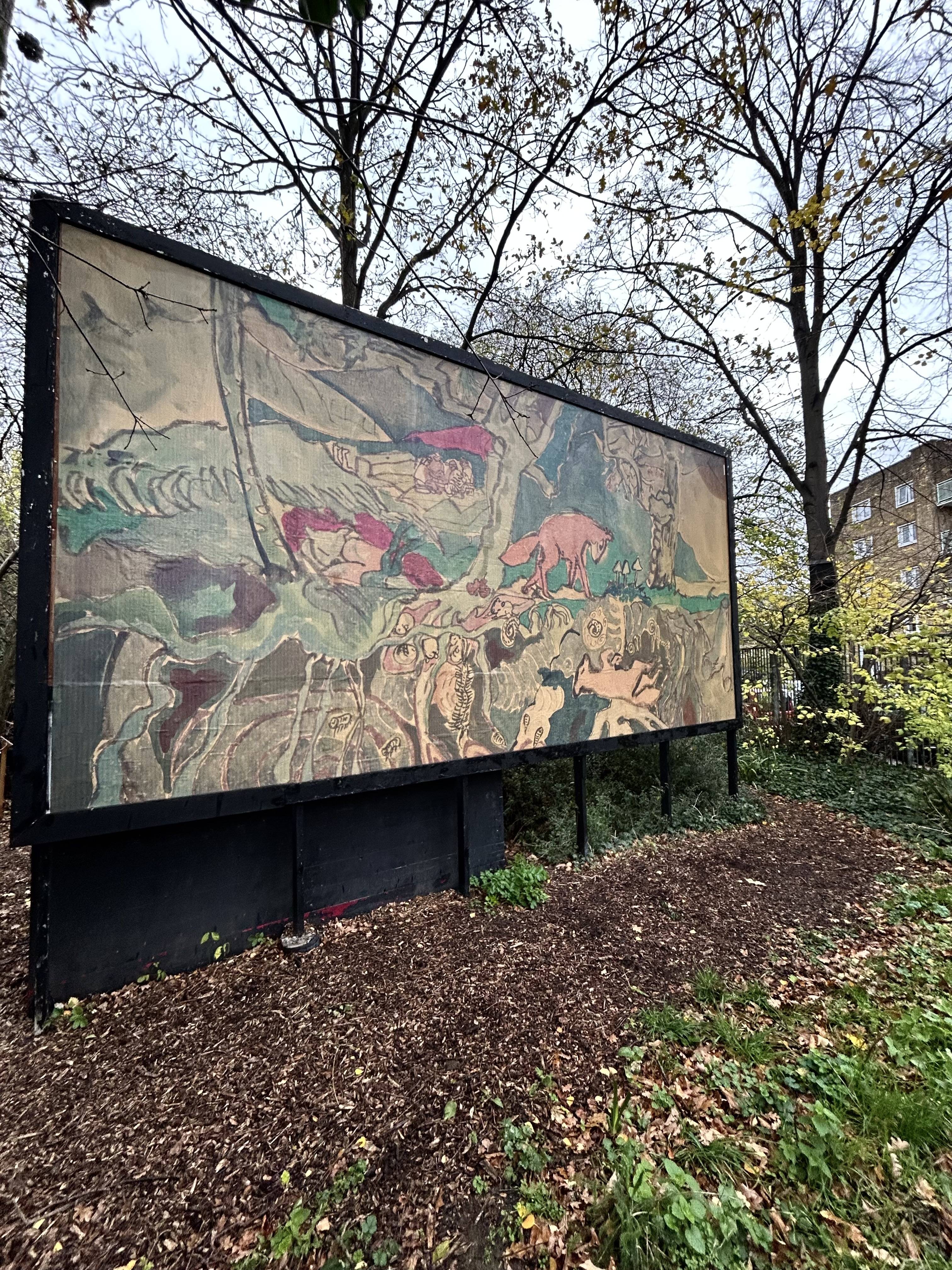
Climate & Adaptation Course
Experimental School of Urban Ecologies
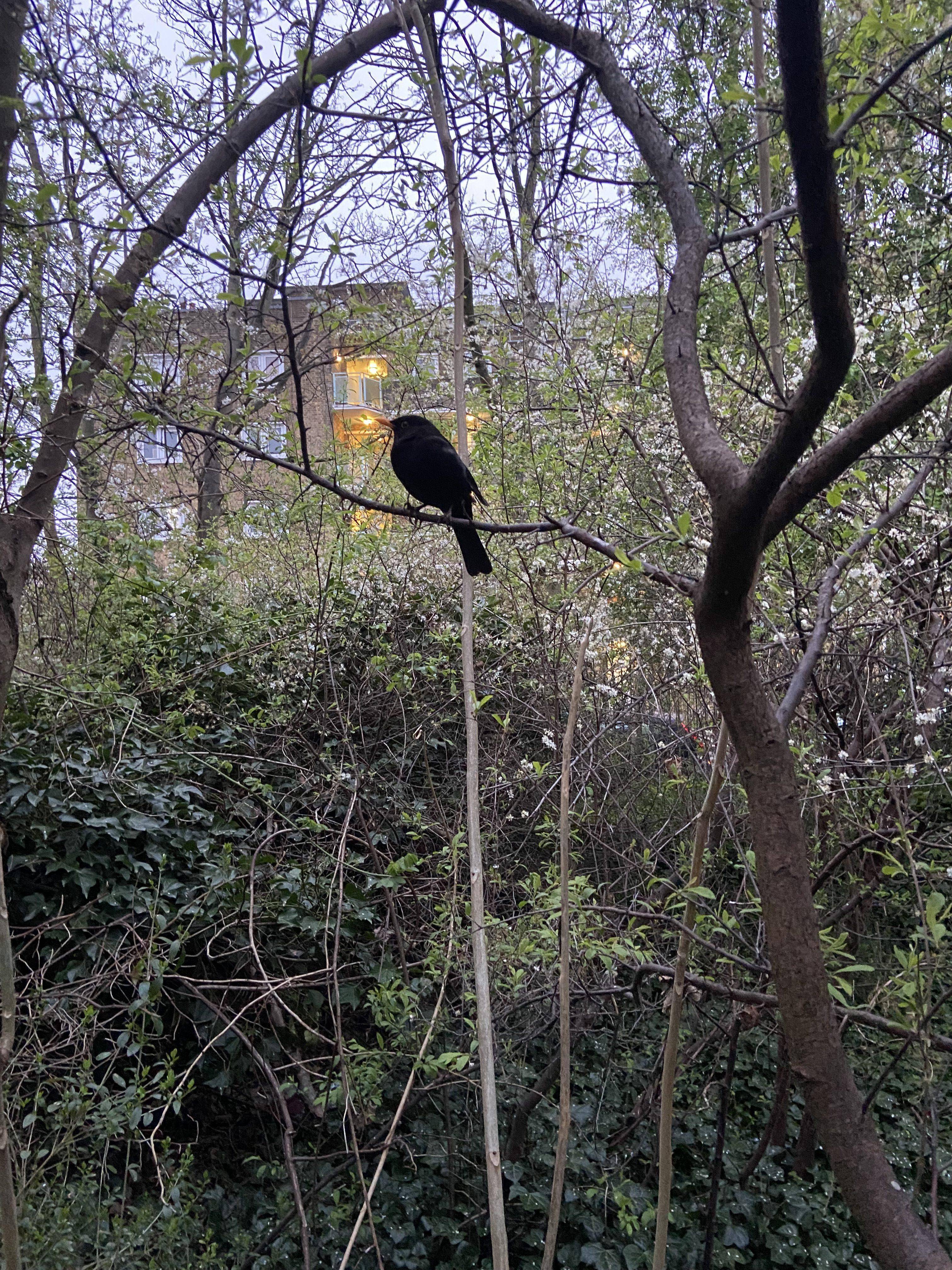
Black Bird, Bethnal Green Nature Reserve
A hands-on course exploring nature-led,
community-based responses to the climate crisis,
blending deep ecology, culture, science and local knowledge.
By 2050, London’s climate is likely to be similar to that of current day Barcelona*. This has profound implications for our daily lives, the resilience of our communities and urban wildlife. This hands-on course explores nature-led, community-based responses to the climate crisis, blending deep ecology, culture, science and local knowledge. It encourages proactive, innovative, and locally grounded ways of living with a changing planet.
Interdisciplinary by design, the programme combines experiential learning, creative thinking, intersectional research and practical skills. We have called it ‘Experimental School of Urban Ecologies’ because the challenges we’re facing today demand new ways of learning, collaborating, and sharing knowledge. The programme is organised in 10 modules, developed by ecologists, land workers, social justice organisers, artists and scientists, delivered in-person through a mix of lectures, field trips, practical workshops, and discussion circles.
This course supports students with knowledge, practical skills and confidence to design and implement local responses to the climate crisis within their communities and local ecosystems. Students are supported in developing a Capstone project: a proposal or outline for local action whether through community organising, ecological initiatives, creative projects, or other approaches that matter to them. The first nine modules are closely interconnected, meaning that ideas and practices from each will be relevant to every student’s interests and capstone project.
- Bastin et al. (2019) Understanding climate change from a global analysis of city analogues
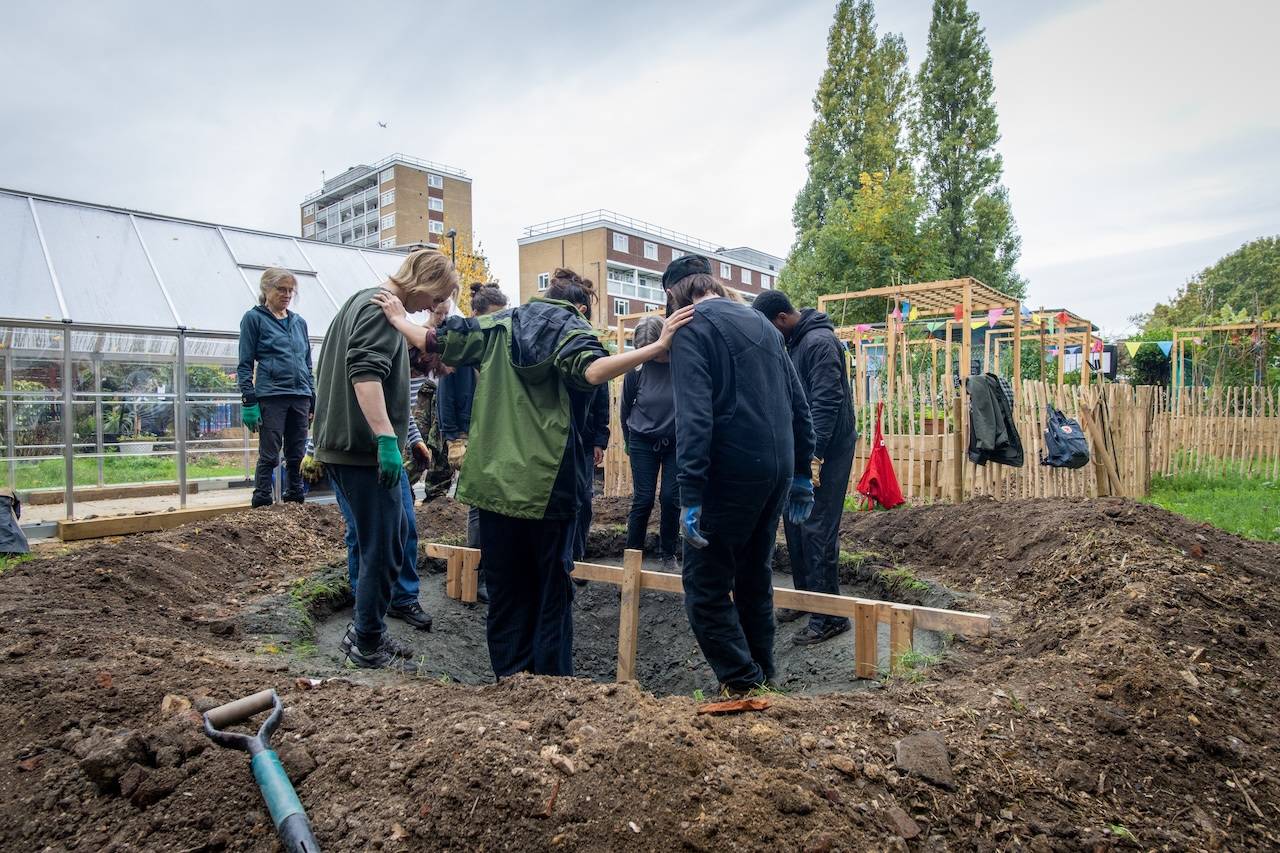
Ecology pond build; photo by Ines Stuart Davidson
Who the course is for
This course is designed for adults (18+) who want to better understand the climate and biodiversity crises, and take practical action in their local communities through creative approaches.
To ensure students who will benefit the most from this year's subsidised fee are able to participate, we will shortlist x15 participants based on the ‘expression of interest’ form the registration linked below.
We welcome people from all backgrounds who are open to critical discussion, collaborative learning, and developing their own self-directed projects. It may be especially valuable for anyone looking to grow personally or professionally, particularly in fields such as community organising, ecology, horticulture, environmental education, and/or the arts.
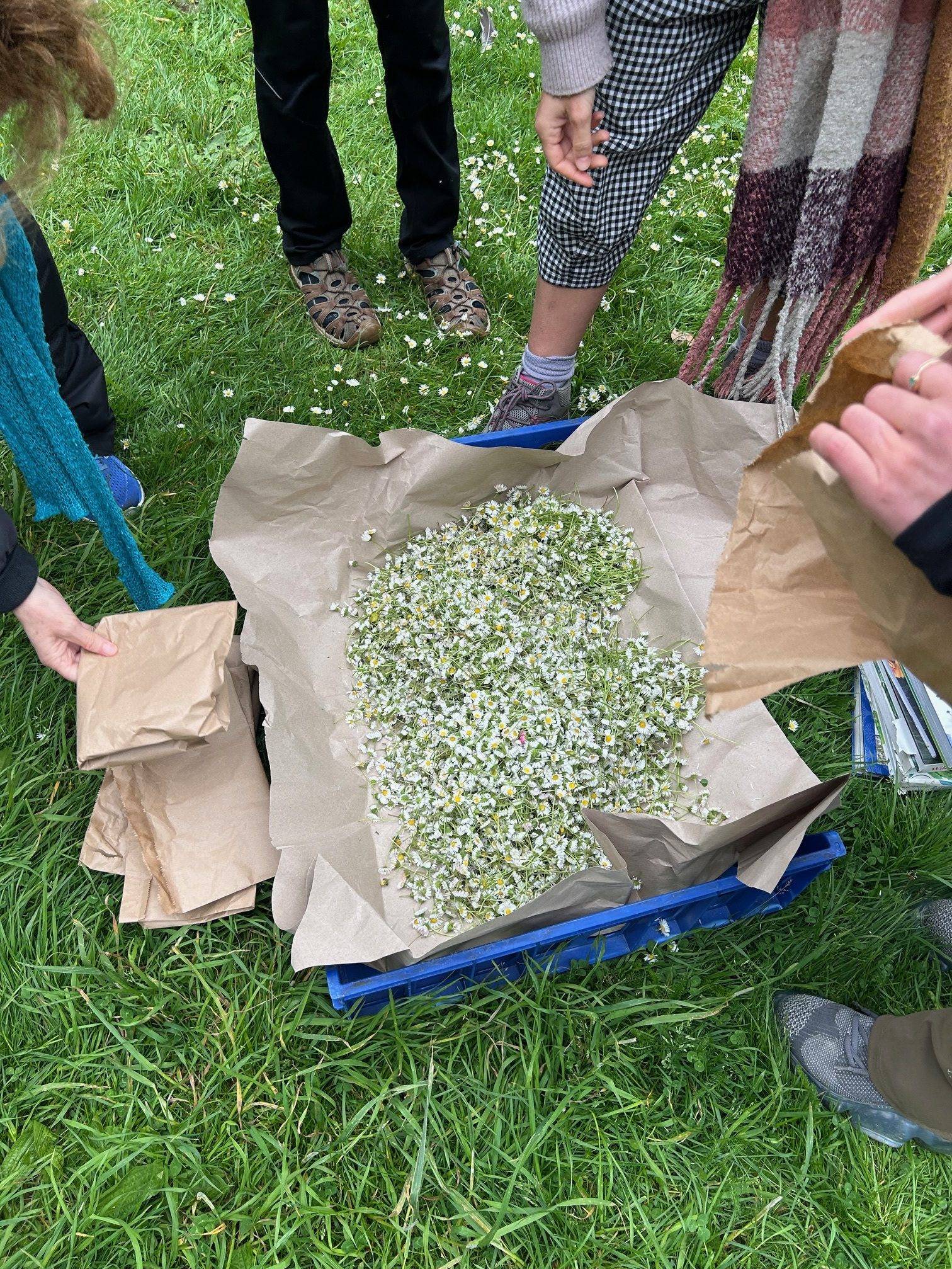
Daisy Harvest, Mobile Apothecary
Times, Dates, Module Themes
Week 1.
10am-5.30pm, 6th June
The Climate and Biodiversity Crises
This module explores how London is being affected by climate change and biodiversity loss. What will the city’s climate be like in 2050? What does this mean for the city’s human residents and wildlife? This module sets the scene for the rest of the course, providing foundational knowledge and raising key questions.
Introduction to Capstone Project
The Capstone project is an invitation for students to design a location-specific intervention, cultural response, or community action. Each project should be rooted in their particular ecosystem and community, drawing on students' lived and hyper local experience. Projects are shaped by local context, course material, and independent research. The Capstone Project (Module 10) will run throughout all sessions, culminating in student presentations in the final week.
Week 2.
10am-5.30pm, 20th June
Urban Ecology and Ecological Health
The urban ecology module explores ecological principles that help us understand the nature around us in the city and how to assess the health of urban habitats. You’ll learn through presentations, guided walks and observation.
Week 3.
10am-5.30pm, 4th July
Cultural Practices
As we bear witness to ongoing occupation, war and other modes of state sanctioned ecocide, what role do artists play in repairing our connection with the ground we stand on? In this module, we explore the myriad ways in which artists re-animate our severed relationship with urban ecologies as we engage with creative practices that are multi-sensorial and polyvocal.
Week 4.
10am-5.30pm, 18th July
Population Mental Health
This module provides an introduction to the impacts of extreme heat on our mental health, including underpinning mechanisms and the main risk factors. It also explores how nature can help mitigate these impacts, inviting students to develop ideas of equitable nature-based solutions.
Week 5.
10am-5.30pm, 5th September
Urban Food Justice
Access to good food is a human right and essential to the health of ourselves and our communities. This module explores what our food systems look like and how they are shaped by changing environmental, political and social climates. With a focus on urban food growing and community organising, we attempt to answer the question: What do we need to do to feed ourselves well and gain sovereignty over our food choices?
Week 6.
10am-5.30pm, 19th September
Land Care Practices (Soil)
Introducing the concept of an ‘Ecological First Aid Kit’, this module equips students with the practical tools needed to care for their local ecosystems. It focuses on a key element of urban ecosystem care: soil. Students build their confidence to engage with practical ecology and the underpinning theoretical aspects.
Week 7.
10am-5.30pm, 3rd October
Community-led Ecological Projects
This part of the course takes place outside of the Bethnal Green Nature Reserve. We visit a variety of ecological projects across East London. Through guest speakers and site visits, students learn about the possibilities and practicalities of community-led urban food growing, re-wilding and climate adaptation.
Week 8.
10am-5.30pm, 17th October
Social Justice
This module invites participants to critically examine climate injustice through an intersectional feminist and decolonial lens. It aims to deepen understanding of how systems of power such as colonialism, patriarchy, and capitalism are moving us towards ecological collapse and their unequal impacts across communities. The course centres lived and embodied knowledge, challenging dominant narratives around climate injustice. It provides a participatory and reflective learning space where students are encouraged to question assumptions, engage in dialogue, and connect personal experiences to broader structural issues.
Week 9.
10am-5.30pm, 31st October
Land Care Practices (Air)
Following on from the first Land Care Practice module about soil, this session focuses on a more ephemeral aspect of urban ecology: air.We look at air as an arena in which a host of complex interactions play out by engaging with acoustic ecology, light pollution, and air quality. By examining how these intersect with each other and the climate, we ask how we might adapt our practices to better care for local ecosystems under changing conditions.
Week 10.
10am-5.30pm, 7th November
Capstone Project Presentations
Each student gives an in-person presentation on their Capstone project, sharing learnings and insights. Presentations are followed by a group discussion and feedback with students and staff.
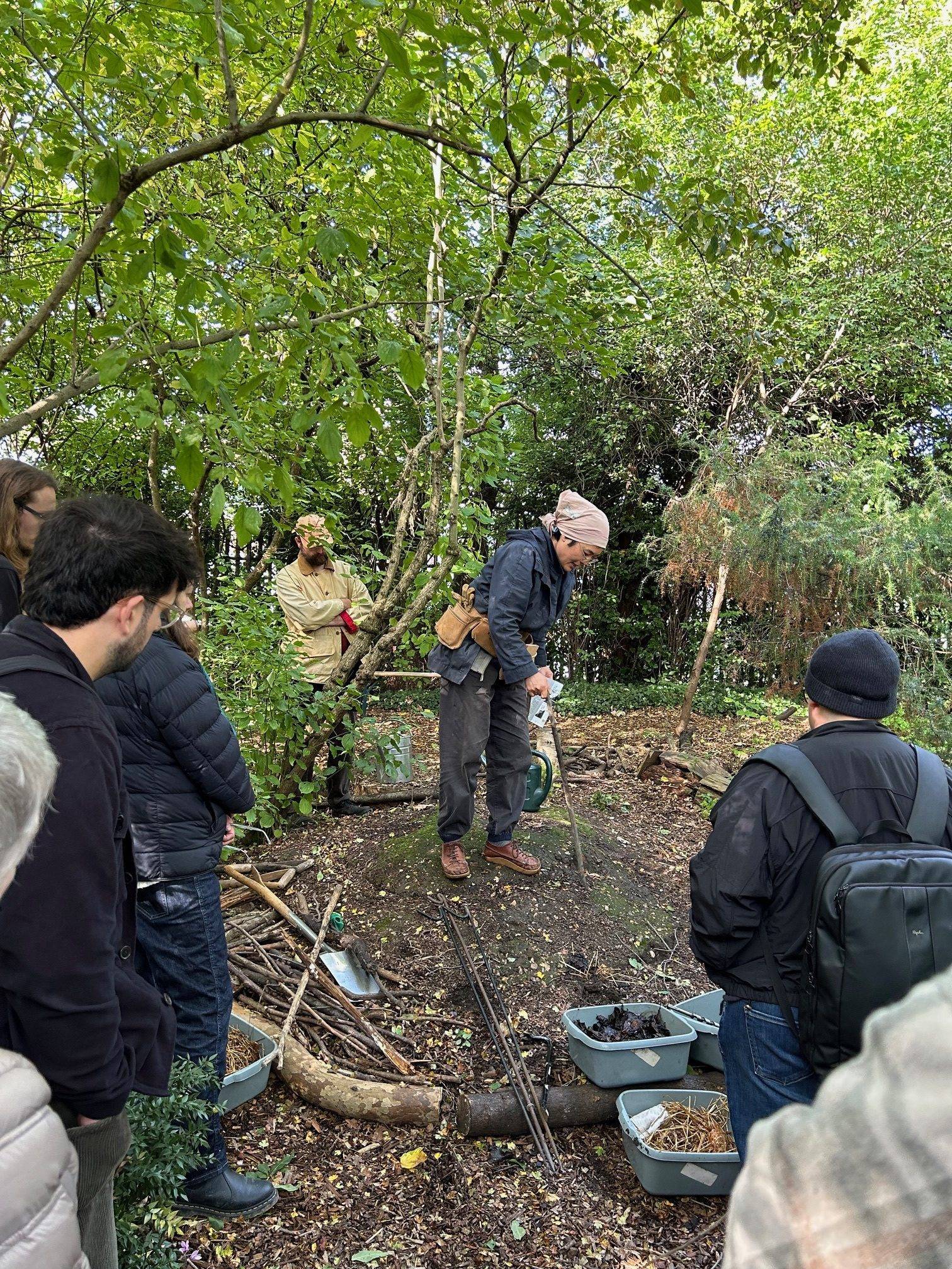
Soil Restoration Workshop by Nozomi Nakabayashi
Venue
The course takes place primarily at the Bethnal Green Nature Reserve, an outdoor, off-grid cultural institute in East London. Both a living landscape and an educational space, the Reserve is dedicated to intersectional research across culture, ecology, and community learning.
Week 7: Community-led Ecological Projects will take place in multiple offsite locations, all within a mile of the Nature Reserve.
What you will need
- Pens or pencils
- Notebook (weatherproof if possible)
- Wet weather clothing suitable for all seasons
- Sturdy, waterproof footwear
- Warm layers (even in warmer months)
- Reusable water bottle
- Packed lunch and snacks
Please ensure clothing is appropriate for uneven terrain and changing weather conditions, as sessions will take place outdoors in all but extreme conditions.
Some guest lectures will be held online on weekday evenings, so you will occasionally need access to a smart device and reliable internet. Please let us know if you would like to discuss any adjustments to support your access to the online components of the course.
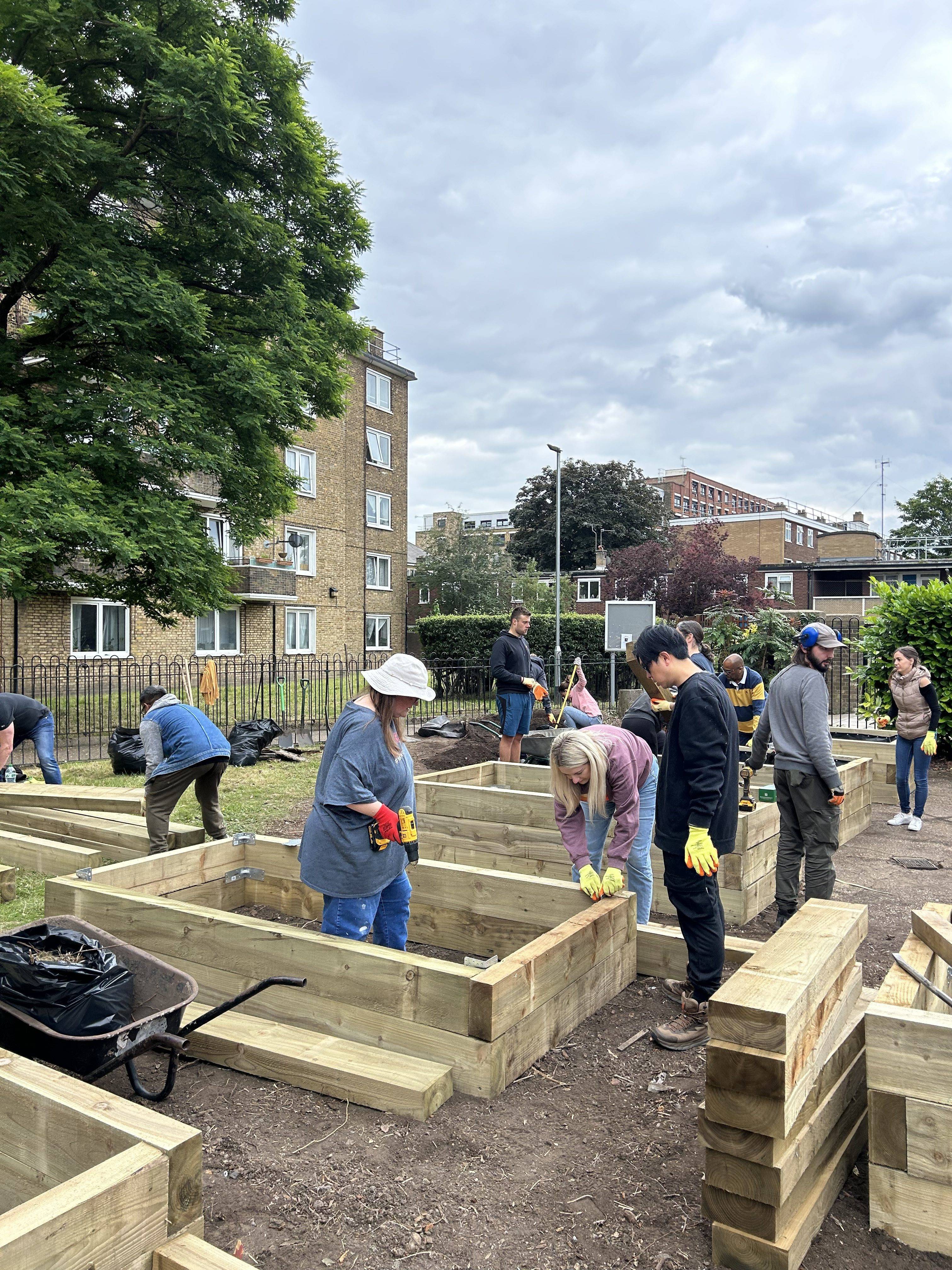
Food Garden Build, Bethnal Green Nature Reserve
Course leader biography
The course is led by a core team of facilitators, with support from a diverse network of guest speakers and collaborators.
Amrita Dhallu
Amrita Dhallu is an independent curator, editor and researcher based in the South East of England. She provides support structures for artists through commissioning, editorial projects and creating artistic networks. Working across installation, performance, publishing, and aural records, she builds embodied curatorial frameworks that centre polyvocality and collaborative research. She is currently Associate Curator at Grand Union, Birmingham.
Rae Hippolyte
Rae Hippolyte is an educator, food grower and creative practitioner from London. Founder of DIGS (Diversity In Green Spaces), a project that creates outdoor experiences for marginalised youth, and former Co-Director of Folx Farm, Rae has worked with food for nearly a decade and is passionate about food and alternative education as vehicles for change and community building.
Shunn Lei
Shunn Lei is a multidisciplinary cultural worker, feminist researcher and organiser. With extensive ethnographic research experience for more than 10 years in Burma/Myanmar and in Southeast Asia, her area of interests are rebel memories, feminism, diasporic identities, labour, social reproduction, dissidents of the state and revolutions. Drawing inspiration from marginalised lived experiences and decolonial feminist thoughts, her approaches include participatory media, and decolonial feminist methodology.
Dr Andrea Mechelli
Andrea Mechelli is a Professor of Early Intervention in Mental Health at King’s College in London, UK. He is an expert in how our environments, from busy cities to green spaces, shape our mental health. His current research focuses on the effects of extreme heat and air pollution on mental health and how urban nature can help mitigate these impacts.
Ross O’Ceallaigh
Ross is an educator and communicator with a background in urbanism, ecology and sustainability. He has a decade of experience working in urban planning and design and is Director of Urban Wilding Hub, a nonprofit with a mission to mainstream rewilding in cities across Europe. Ross writes and podcasts under the name Green Urbanist.
Edward Simpson
Edward is the site manager of Bethnal Green Nature Reserve, where he has been caring for this urban ecosystem and community space for the past four years. At the Experimental School, Edward will lead sessions focused on land care practices and community building. His work supports hands-on learning, shared observation, and the development of reciprocal relationships between people and the site. His approach is informed by his background as an artist and musician, bringing an experimental and exploratory approach to his practice.
Michael Smythe
Michael Smythe is an artist and land worker whose practice spans both digital and location-specific work. He explores the intersections of culture, ecology, and population health, with a focus on how these forces shape life in cities. His current projects include:
- Phytology / Bethnal Green Nature Reserve (2014-present): a cultural institute centred on land-based practices.
- Mobile Apothecary (2018-present): a herbal medicine dispensary offering free health support to underserved communities in East London.
- Urban Mind (2016-present) and NatureBoost (2025-present): research initiatives exploring the relationship between mental health and biodiversity across global populations.
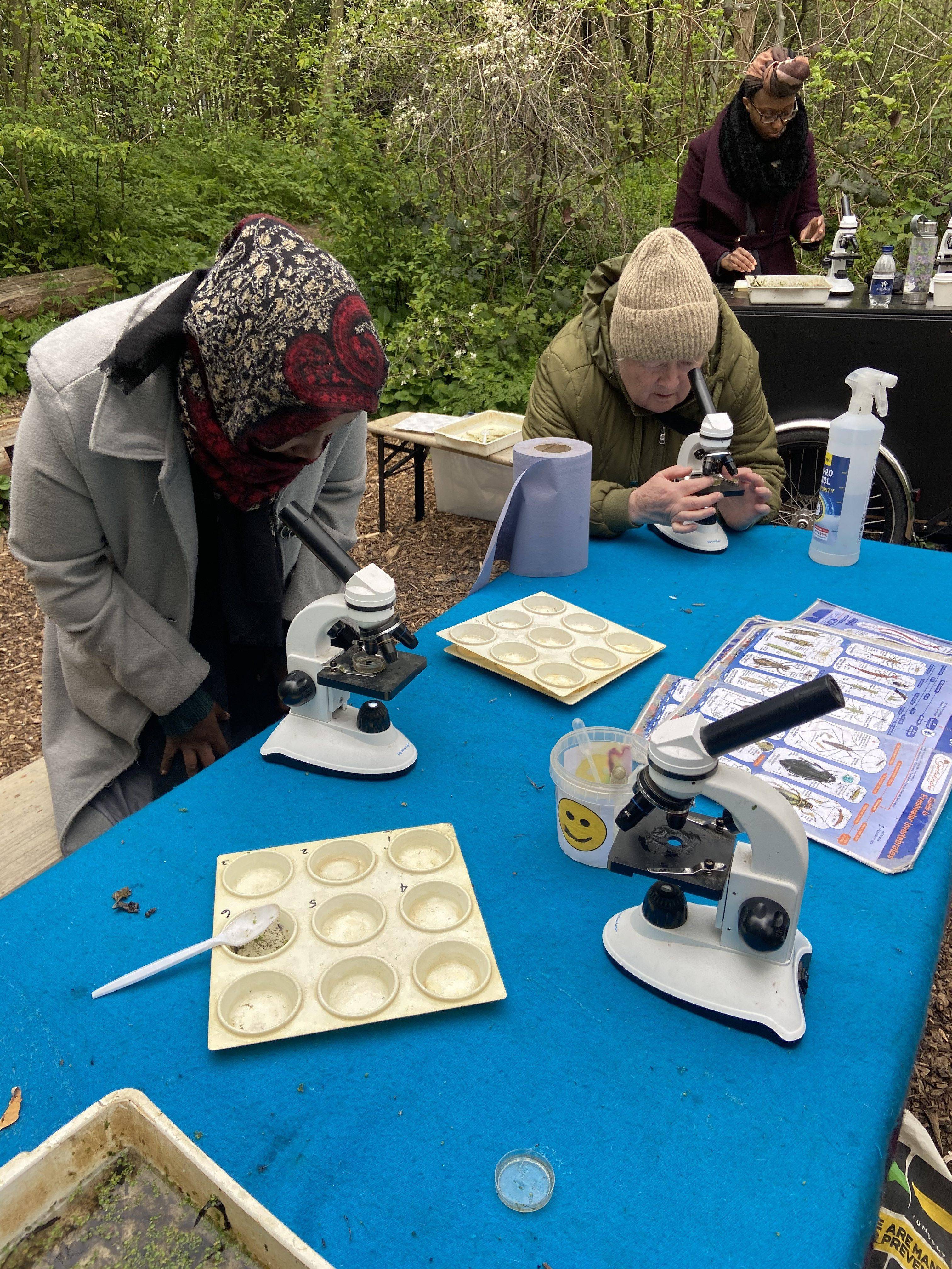
Pond Microscope Workshop, Bethnal Green Nature Reserve
Pricing & additional information
The full course costs £200 for 10 modules with a subsidised rate for our 2026 pilot year. From 2027 onwards, the projected cost for this course will be approximately £1,200.
If you’re unwaged or on a low income, we offer x2 discounted places (£100). This is open to the first two people applying with limited financial security or receiving benefits such as Universal Credit.
If you’re able to pay the standard price, please do, it helps us keep future courses and programming at Bethnal Green Nature Reserve accessible to the wider community.
Refund Policy
If you need to cancel your booking, you are entitled to a full refund if notice is given at least two weeks before (22nd May 2026) the start of the course (6th June 2026). Notice can be given by emailing; experimental@bethnalgreennaturereserve.org.
No partial refunds will be provided for late cancellations or missed sessions. If a session is postponed for any reason, Bethnal Green Nature Reserve will reschedule.
Register your place on the Climate & Adaptation course below (x15 places available). Registration closes on midnight, 20th April 2026.
Supported by Bethnal Green Nature Reserve and